 English
 Español
 Deutsch
 日本語
 中文简体
Aftermarket Car Grille Buying Guide: Materials, Fitment, Styles & Installation
Home / News / Industry News / Aftermarket Car Grille Buying Guide: Materials, Fitment, Styles & Installation



Our team is proud to offer on time guarantee and product guarantee to customer satisfaction.
Read More
Content
A cracked factory grille from a highway rock strike can cost more to replace than most owners expect, and a front end that looks dated next to the current model year is the reason many drivers start searching for an aftermarket car grille. The difference between a satisfying upgrade and a frustrating one comes down to three decisions: material, fitment, and application-specific features. This guide walks through each one with the same criteria a professional workshop applies when it recommends a front grille to a customer.
An aftermarket car grille controls airflow into the radiator and intercooler, protects the cooling stack from road debris, and establishes the visual identity of the front fascia. A grille that looks aggressive but blocks airflow will raise coolant temperatures under load, so function comes first.
The front grille performs four distinct jobs on a modern vehicle:
Material choice determines how a grille weighs, ages, and behaves in an impact, and it is the first decision a buyer should make. Each material has a different production process, surface finish, and price point, so the right choice depends on the vehicle's use case.
| Material | Typical weight | Impact behavior | Surface options | Best use |
| ABS plastic | 1.9 kg | Flexes and resists cracking | Gloss black, matte, chrome-look | Street cars, daily drivers |
| Aluminum alloy | 3.1 kg | Dents on hard impact | Brushed, powder-coated | Lightweight builds, off-road |
| Steel | 5.0 kg | Very high strength | Powder-coated | Trucks, heavy-duty fits |
| Carbon fiber | 1.4 kg | Strong but brittle on point impact | Clear-coated weave | Track cars, show cars |
ABS grilles are injection-molded, which keeps tooling precise and unit cost low. Aluminum grilles are usually CNC-cut and formed from sheet stock, while steel units are welded and powder-coated. The production process behind each material affects consistency of fit: a molded part reproduces the original panel geometry exactly, while a fabricated part depends on the welder's skill. Factory-direct manufacturing with precision molding and CNC capacity is what separates a grille that lines up at the hood and fenders from one that needs brackets and filler work.
A grille is defined by fitment: panel gaps of two to three millimeters separate an OEM-quality result from a visibly modified one. The same grille pattern sold as universal can look acceptable on one vehicle and misaligned on another, which makes vehicle-specific engineering the most important selection filter.
Fitment begins with the chassis code and model year. A 2015 Mercedes-Benz GLE 63 (W166) grille will not fit a 2019 GLE 63 (W167) because the headlamps, hood line, and bumper contour changed. The same applies to Toyota platforms: an Alphard grille built for the 2018-2023 generation is different from the 2011-2014 upgrade conversion.
A direct-fit aftermarket grille is engineered to use the original mounting points, openings, and fasteners of a specific chassis code, requiring no cutting or modification during installation.
Complete front-end conversion kits take the same logic further. A Maybach-style package for the 2020 GLS 63 (X167), for example, replaces the grille together with the bumper and lower trim so that all lines match. For Alphard and Vellfire owners, front-end conversions built around the 2018-generation face are the most popular way to modernize an older MPV.
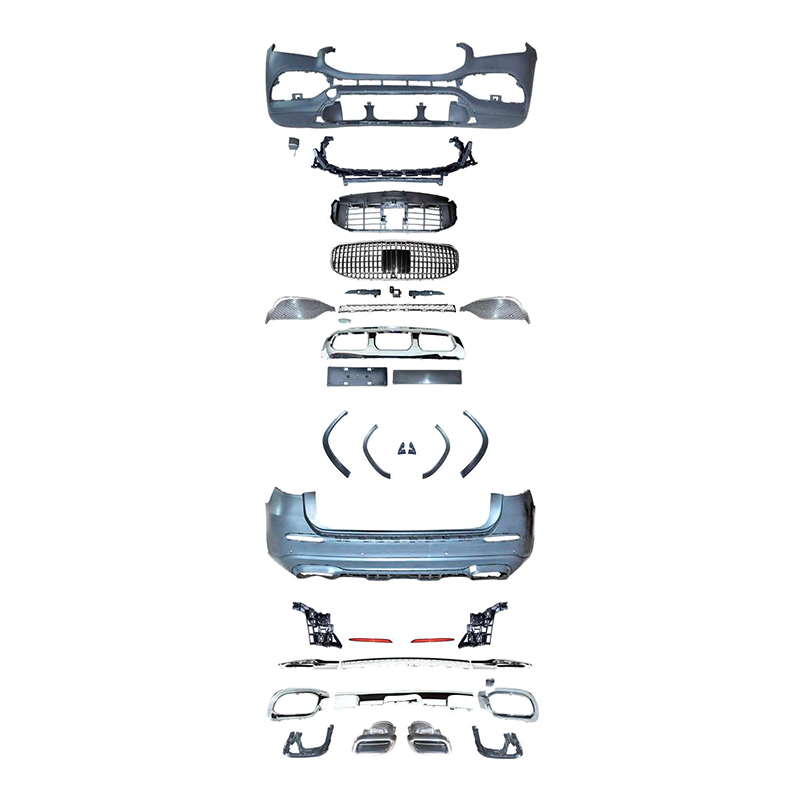 Maybach-Style Body Kit for 2020+ Mercedes GLS 63 (X167)This complete front-end conversion replaces the grille, bumper, and trim to adopt Maybach design cues. It suits GLS 63, 580, 450, and 550 models, offering a cohesive luxury appearance without conflicting with surrounding body lines.View Product →
Grille geometry is the visual language of a car: mesh reads performance, horizontal slats read width, and a diamond lattice reads luxury. Choosing a pattern without considering the surrounding body lines is the most common design mistake in aftermarket front-end work.
The main grille patterns and their effect on vehicle character:
Automotive designers treat the grille as the most recognizable element of a model line, which is why a pattern that fights the bumper and headlamp angles looks obviously aftermarket. Before buying, compare the grille's outer contour with your vehicle's hood line and lamp shapes; the visual language of grille design explains how manufacturers position a model through this single component.
 Durable Custom Front Grille for Various Car ModelsThis grille upgrade is built from ABS or stainless steel with finishes like gloss black or chrome, improving airflow and cooling. It is offered by a Chinese supplier with OEM/ODM capabilities, supporting precise fit and long-term durability.View Product →
Most direct-fit aftermarket grilles install in under an hour with basic hand tools, but fastener quality and alignment checks decide whether the gap stays even after months of heat cycling and vibration. Rushing the install is the main cause of rattles, mismatched gaps, and premature cracking around mounting tabs.
Follow this sequence for a clean installation:
Durability is also a supply-chain consideration. Grilles built for specific chassis codes, such as the 2018-2023 Alphard and Vellfire front-end conversions, are stocked in fewer warehouses than universal panels, so confirm stock status when planning a build around a deadline.
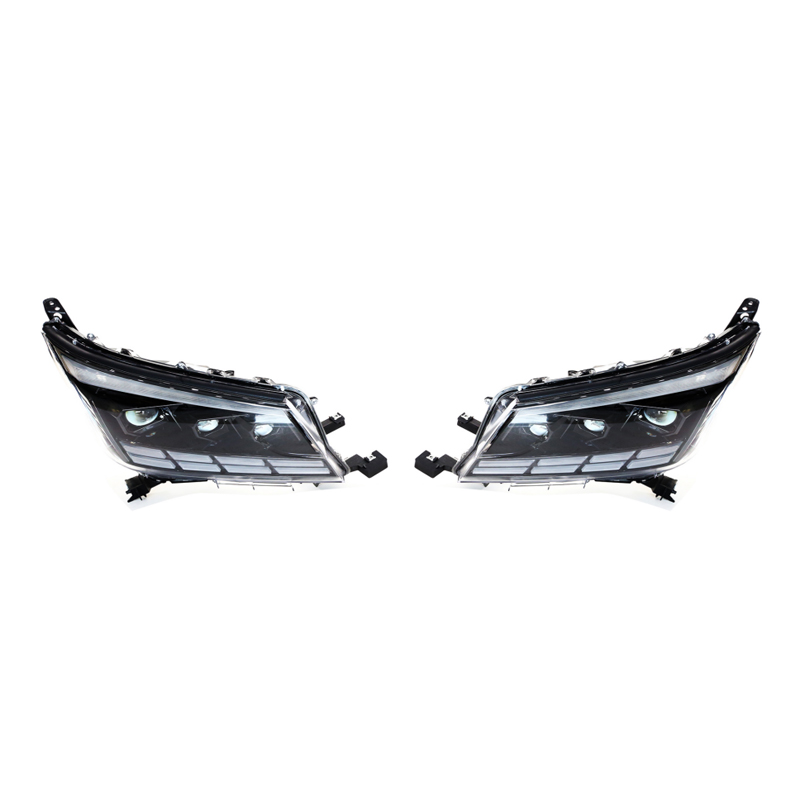
 2018-2023 Toyota Alphard Complete Body Kit UpgradeThis package includes front bumper, lip, grille, rear lip, side skirts, headlights, and daytime running lights, designed to match OEM mounting points. It modernizes older Alphard models and emphasizes safety and visual distinction.View Product →
No. Fitment is chassis-code-specific. A grille built for a 2019 GLE 63 (W167) will not fit a 2015 GLE 63 (W166) even though both share the GLE name. Always match the grille to the exact chassis code and model year listed by the manufacturer.
They can. A grille with a low open-area ratio reduces airflow to the radiator and intercooler, which raises coolant temperatures under load. If the vehicle is tuned, tows, or sees track time, choose a mesh or honeycomb pattern with a high open-area ratio.
UV-stabilized ABS plastic is the most practical choice for street use. It resists cracking, matches factory panel gaps, and costs less than aluminum or carbon fiber to replace if it suffers stone damage.
On many vehicles, yes. The grille is attached from the front with clips and screws and can be swapped without bumper removal. On others the grille and bumper share fasteners, so the bumper cover must be partially released. The product description should state the required procedure.

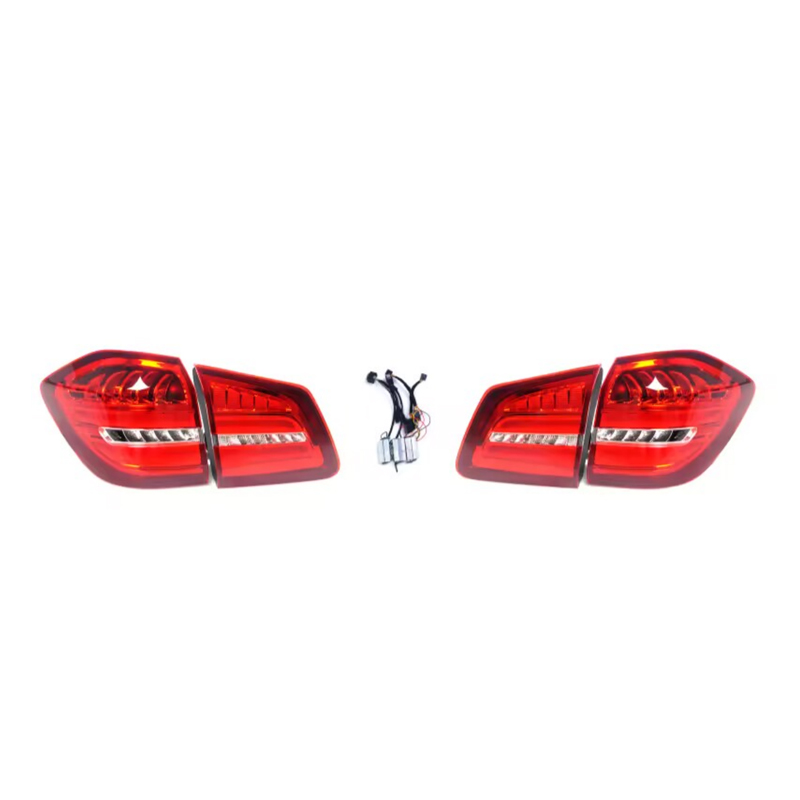
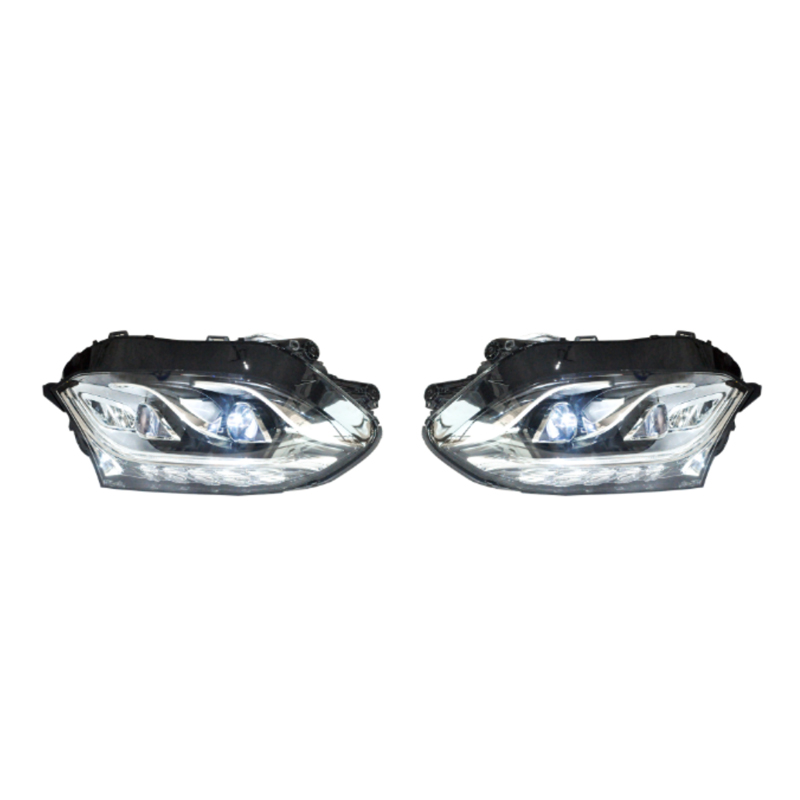

If you are interested in our products, please consult us
No.280, Xincun, DongJia Village, Menghe Town, Xinbei District, Changzhou, Jiangsu, China.
+86-13915098651
+86-18068774710
+86-18068791866
+86-519-68885718
Changzhou Xinkai auto parts Co., Ltd. All Rights Reserved. Custom Automotive Exterior Accessories Manufacturers
