 English
 Español
 Deutsch
 日本語
 中文简体
Car Front Grille Guide: Function, Materials, and Smart Upgrade Choices
Home / News / Industry News / Car Front Grille Guide: Function, Materials, and Smart Upgrade Choices



Our team is proud to offer on time guarantee and product guarantee to customer satisfaction.
Read More
Content
A 60 mph stone strike, a parking-garage corner, or a careless shopping cart can crack a car front grille faster than most owners expect. The repair decision is rarely just about looks: the grille sits directly in the path of the engine cooling airflow, holds sensors and cameras on modern vehicles, and carries a surprising share of the vehicle visual identity. This guide explains what a car front grille actually does, how material choice changes performance and cost, and what to verify before buying a replacement or an upgrade.
A car front grille is the structural lattice at the front of the vehicle that regulates airflow into the cooling package while shielding the radiator and condenser. Its openings direct a controlled volume of air toward the radiator, condenser, and intercooler while the vehicle is moving, which is why a blocked or incorrectly sized grille can raise coolant temperatures and reduce air-conditioning performance.
The second job is protection. The grille's lattice, whether mesh, slatted, or honeycomb, stops large debris, insects, and road grit from hitting the radiator fins, which cost far more to replace than the grille itself. The third job is aerodynamic: a modern grille balances the air that must pass through the cooling package with the air that should flow around the body to reduce drag. On Mercedes-Benz and Toyota models, the grille also carries the visual language of vehicle model positioning and style, and replacing it changes the entire face of the car.
Material choice decides weight, impact resistance, repair cost, and how long the part keeps looking new. In practice, a car front grille is made from one of four basic materials.
| Material | Typical Weight | Impact Resistance | Repair Cost | Typical Application |
| ABS plastic | 1.2-1.5 kg | Good, cracks under hard impact | Low | Factory and aftermarket grilles |
| Chrome-plated ABS | 1.3-1.6 kg | Good, plating can peel | Medium-high | Luxury and OEM-style grilles |
| Aluminum alloy | 1.8-2.2 kg | Good, dents instead of cracks | Medium | Off-road and performance grilles |
| Stainless steel | 3.0-3.5 kg | Excellent | High | Truck and commercial grilles |
For passenger vehicles, ABS plastic dominates because it is light, inexpensive to mold into complex shapes, and easy to paint. Aluminum alloy suits owners who want structure without the mass penalty. Stainless steel is the choice for commercial and off-road builds where durability outweighs weight. Material also affects plating: a chrome-finish ABS grille looks close to metal but costs a fraction of a stainless unit.
 Durable ABS or Stainless Steel Front Grille ReplacementExplore a grille upgrade for your vehicle’s front fascia, offered in materials like ABS and stainless steel with finishes such as gloss black or chrome. This supplier focuses on durable construction and improved airflow.View Product →
Aftermarket grilles match or exceed factory quality only when sourced from a manufacturer that controls tooling and finishing; the market also contains cheap copies that warp, peel, or misalign.
The safest aftermarket path is a factory-style replacement from a producer that lists the exact vehicle code and year range it fits. On AMG-line Mercedes-Benz models, the grille is commonly upgraded together with the bumper and lower lip as one front-end body kit so all surfaces align with the factory panel gaps. For the S Coupe W217, that kit also includes the AMG-style grille surround.
 2014-2020 Mercedes-AMG S Coupe W217 Body KitA complete front-end body kit for the S Coupe 63 W217, including front bumper, grille, rear diffuser, and tail tips. Designed from original manufacturer data for precise alignment and installation without extra modification.View Product →
Match a grille by three criteria: exact vehicle code and year, sensor and camera compatibility, and material suited to your climate and usage. Getting these three right eliminates most returns and installation failures.
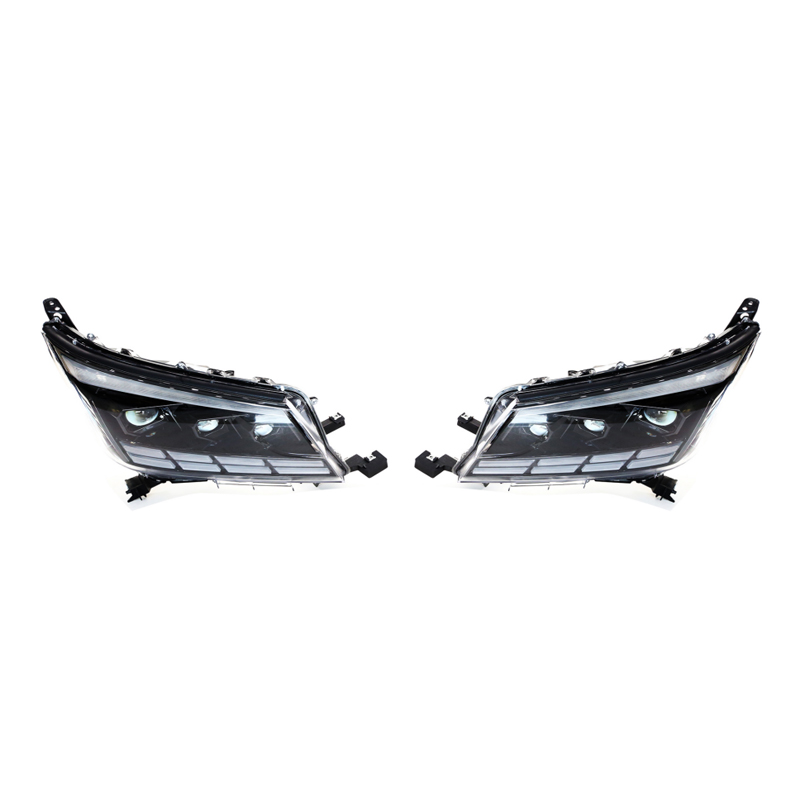
 2018-2023 Toyota Alphard High-Quality Body KitA body kit package for the Toyota Alphard, covering front bumper, front lip, grille, rear lip, side skirts, daytime running lights, and headlights. Components are engineered to fit OEM mounting points and body contours.View Product →
A direct-fit aftermarket grille installs in about 30 to 60 minutes with hand tools; long-term condition depends on cleaning habits and the quality of the clips.
Cleaning is straightforward: use low-pressure water, mild soap, and a microfiber cloth. A pressure washer aimed directly at the grille can push water past the radiator into wiring connectors, and aggressive alkaline cleaners strip chrome plating over time.
The answers below cover the questions buyers ask most before ordering a replacement or an upgraded grille.
Only if its open area is small. A mesh grille with more than 50 percent open area generally keeps airflow sufficient, while solid horizontal-bar designs can reduce cooling enough to matter in hot climates.
Yes. Most passenger-vehicle grilles are held by screws and clips; the job takes 30 to 60 minutes with a trim tool and screwdriver. Vehicles with a front camera or adaptive cruise radar need extra care when rerouting wiring.
Use the production year, chassis code, and trim level. Compatible listings usually state a code such as X166 for the Mercedes-Benz GLS or W217 for the S Coupe. If the listing is unclear, send the supplier your VIN before ordering.
Yes. The radar behind the grille needs a uniform, radar-transparent area in front of it. Dense metal mesh or thick chrome can interfere with the signal, so choose a grille with a designated sensor cutout or solid pad.


If you are interested in our products, please consult us
No.280, Xincun, DongJia Village, Menghe Town, Xinbei District, Changzhou, Jiangsu, China.
+86-13915098651
+86-18068774710
+86-18068791866
+86-519-68885718
Changzhou Xinkai auto parts Co., Ltd. All Rights Reserved. Custom Automotive Exterior Accessories Manufacturers
