 English
 Español
 Deutsch
 日本語
日本語 中文简体
中文简体Car Headlight Upgrade: LED vs HID vs Halogen - Cost, Fitment, and Legal Guide
Home / News / Industry News / Car Headlight Upgrade: LED vs HID vs Halogen - Cost, Fitment, and Legal Guide



Our team is proud to offer on time guarantee and product guarantee to customer satisfaction.
Read More
Content
LED retrofit kits deliver the strongest overall balance of output, lifespan, and energy efficiency for most modern cars, while HID still makes sense in factory xenon projector housings where the original burner geometry is already optimized.
Upgrade options fall into three families. High-performance halogen bulbs reuse the factory socket and ballast-free wiring. HID xenon kits replace the bulb and add an external ballast. LED systems place a driver and cooling fan on or inside the housing. Each family changes the optical result differently, and the difference shows up in beam cutoff, color temperature, and long-term reliability.
| Specification | Halogen Plus | HID Xenon | LED |
| Typical light output | 1,200–1,600 lm | 2,800–3,200 lm | 3,200–4,500 lm |
| Color temperature | 2,700–3,100 K | 4,200–6,000 K | 5,000–6,500 K |
| Rated lifespan | 450–1,000 h | 2,000–3,000 h | 15,000–30,000 h |
| Power draw | 55–60 W | 35–42 W | 25–40 W |
| Retrofit cost | $30–$100 | $80–$250 | $100–$400 |
Typical lumen output by headlight type, based on manufacturer specifications.
Raw lumen numbers do not tell the whole story. An LED chip that is physically longer than a halogen filament can produce a scattered cutoff in a reflector housing, creating glare for oncoming traffic while leaving the road edge dark. The shape of the light source must match the optics, not just the socket.
Confirm the bulb code, housing geometry, CAN bus behavior, and cooling clearance before ordering, because most failed headlight upgrades trace back to fitment mismatches rather than defective parts.
Fitment starts with the bulb code stamped on the housing or listed in the owner's manual. H7 and H11 sockets are common in halogen jobs. D2S and D3S burners belong to factory xenon projectors. The 9005 and 9006 families appear on many Japanese and American platforms. An adapter that changes the physical connector does not change the optical design, which is why LED kits with identical specifications can produce very different beam quality in the same housing.
Assembly-level replacement removes most of these variables. A complete Toyota Vellfire or Alphard headlamp is built for the 2018–2023 body style with the correct connector, reflector geometry, and mounting points already matched to the chassis:
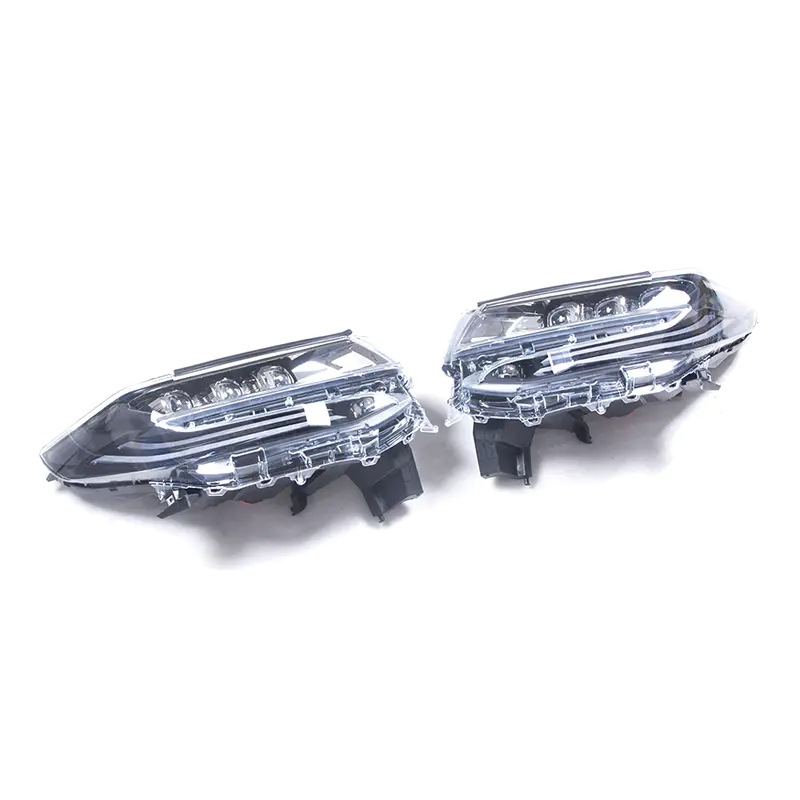 Direct Replacement LED Headlamp Assembly for 2018-2023 Toyota Vellfire and AlphardThis complete headlamp unit for 2018-2023 Vellfire and Alphard uses LED projectors and includes plug-and-play adapters, ensuring the beam pattern, connector, and mounting align with factory standards for a road-legal upgrade.View Product →
A complete assembly eliminates most fitment variables because the manufacturer has already solved the optical, electrical, and mechanical interface. The only tasks left are aiming and final tightening.
A headlight upgrade is road-legal only when the final beam pattern, color temperature, and aim meet the same standards the original equipment was designed to meet.
Major markets converge on similar limits. United States DOT requirements cap glare and mandate a defined low-beam cutoff. European ECE R112 and Chinese CCC rules set photometric thresholds as well. A 6,500 K LED chip can pass in a projector housing engineered for LED sources and fail in a reflector housing designed for a filament, on the same car model.
The safest headlight upgrade preserves the original beam cutoff. If the upgrade blinds oncoming drivers, the lamp is not stronger; the light is simply being misdirected.
Certified complete assemblies carry DOT, ECE, or CCC markings because they have passed photometric testing. Unbranded kits rarely do. Replacing the whole unit instead of the bulb puts the optical design back under the manufacturer's control, which removes the most common legal objection to aftermarket retrofits.
A realistic car headlight upgrade budget runs from $50 for a premium halogen pair to more than $1,200 for two complete LED assemblies fitted by a shop.
Bulb-only upgrades are the cheapest entry point, but they keep the old reflector and lens. If the housing is cloudy or pitted, new bulbs cannot fix the beam. Complete assemblies cost more because they include the housing, lens, electronics, and mounting hardware, and they are the only option that genuinely changes the optical platform.
Price differences also reflect supplier structure. Changzhou XinKai Auto Parts Co., Ltd. (XinKai Auto), a vehicle-parts manufacturer in Changzhou, China, supplies complete lamp assemblies directly to workshops and distributors, which moves the delivered cost closer to factory pricing than to dealership retail. A buyer who sources from the manufacturer side changes the economics of a two-lamp project; the company background page documents their production scope, equipment, and quality programs.
On a Mercedes-Benz GLS63 (X166, 2016–2019), replacing the complete headlamp rather than the xenon burner keeps the adaptive functions and aim calibration intact:
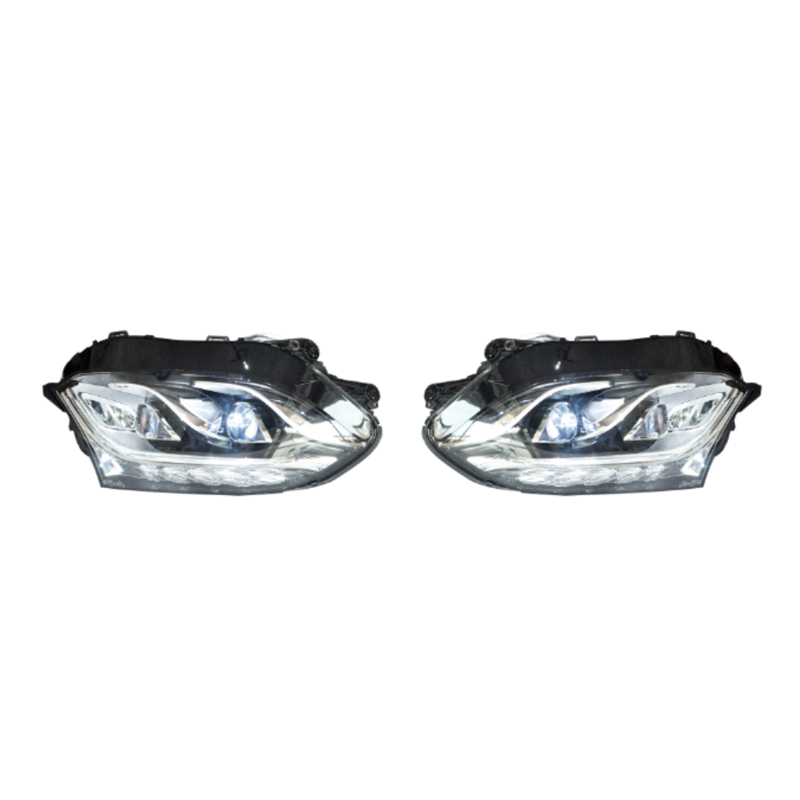 Full LED Headlamp Assembly for 2016-2019 Mercedes-AMG GLS63 X166Designed for the GLS63 X166 facelift, this complete LED assembly replaces xenon or halogen units while preserving adaptive functions and aim calibration, with CAN-bus decoders for plug-and-play installation without coding.View Product →
Commercial vans follow the same logic. The Toyota Hiace (2011–2023) headlamp upgrade uses a complete assembly designed for the Hiace body, which avoids the socket and cooling clearance problems common in van retrofits:
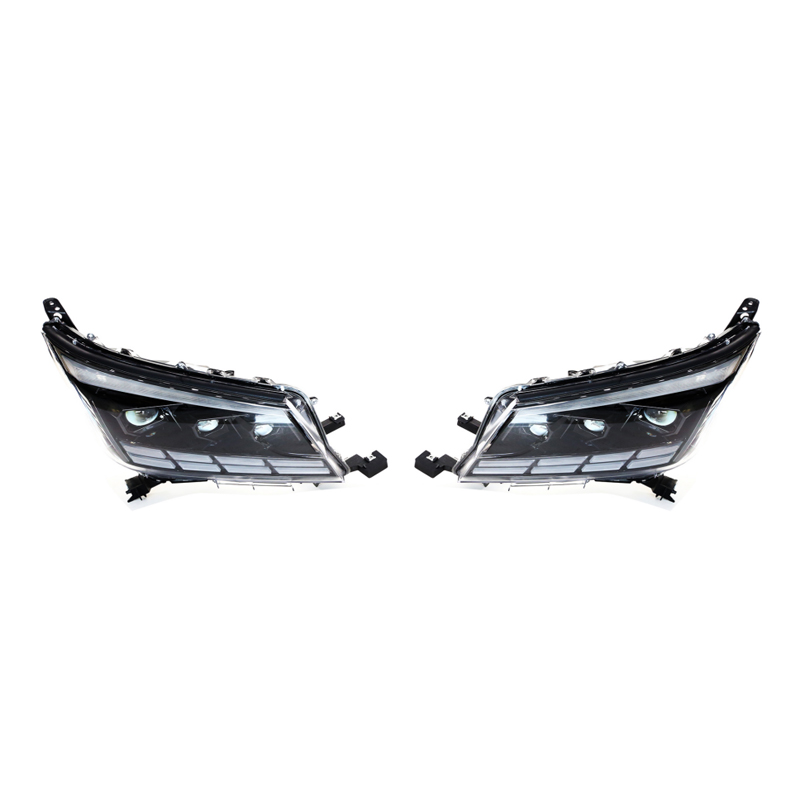 Replacement Headlamp Assembly for 2011-2023 Toyota HiaceThis Hiace headlamp assembly fits standard and long-wheelbase variants from 2011 to 2023, avoiding socket and cooling clearance issues common in van retrofits, with optional LED DRLs and IP65-rated housing for fleet and camper use.View Product →
Run five checks before fitting any headlight upgrade: verify the bulb code, record the existing beam cutoff, bench-test the new lamp, measure clearance, and re-aim both sides.
The difference between a smooth car headlight upgrade and a failed retrofit is rarely the product itself. It is the two hours spent checking fitment, beam cutoff, and aim before final assembly.
An LED upgrade is legal when the completed beam pattern, color temperature, and aim comply with the standards that apply in your region. In practice, this means matching the lamp to the housing or replacing the entire assembly with a certified unit. A plug-and-play kit that scatters light outside the cutoff fails inspection even if the bulb itself is approved.
A high-performance halogen pair costs $30 to $100, a quality LED retrofit kit costs $100 to $400, and two complete LED assemblies with installation typically run $600 to $1,200. Because LED lamps are rated for 15,000 to 30,000 hours, the total cost of ownership often favors LED after the first replacement cycle.
Yes, but the new lamp should match the other side in color temperature and beam geometry. Mixing a 6,000 K LED with a 3,000 K halogen produces an asymmetric pattern that reduces depth perception and makes the car look misaligned.
Quality LED headlights are rated for 15,000 to 30,000 hours, compared with 450 to 1,000 hours for halogen bulbs and 2,000 to 3,000 hours for HID burners. In real driving, a typical LED assembly lasts six to ten years before its output drops below a useful threshold.



If you are interested in our products, please consult us
No.280, Xincun, DongJia Village, Menghe Town, Xinbei District, Changzhou, Jiangsu, China.
+86-13915098651
+86-18068774710
+86-18068791866
+86-519-68885718
Changzhou Xinkai auto parts Co., Ltd. All Rights Reserved. Custom Automotive Exterior Accessories Manufacturers
