 English
 Español
 Deutsch
 日本語
日本語 中文简体
中文简体Body Kit Companies Explained: How Manufacturers Differ and What Buyers Should Check
Home / News / Industry News / Body Kit Companies Explained: How Manufacturers Differ and What Buyers Should Check



Our team is proud to offer on time guarantee and product guarantee to customer satisfaction.
Read More
Content
Two body kits can look nearly identical in catalog photos and still behave completely differently on the car. One lines up with the bumper and fender lines within a millimeter or two; the other needs heat guns, filler, and hours of body-shop correction before the panel gaps look acceptable. The difference usually comes less from the styling than from the company behind the kit: whether it builds its own tooling, which material it molds, and how strictly it checks fitment before shipping.
The short version: judge body kit companies as manufacturers first and styling brands second. A company that molds its own parts, lists products by model year and chassis code, and backs them with real warranties will outperform a reseller with a prettier catalog almost every time. The sections below explain what these companies actually do, how their business models differ, and how to evaluate one before you place an order.
A body kit is a set of exterior components — front and rear bumpers, side skirts, lips, diffusers, spoilers, sometimes grilles and fender flares — that replaces or overlays the factory appearance. Producing that set runs through a chain most buyers never see: styling design and CAD surfacing, tooling fabrication, molding, trimming and finishing, then packing and shipping.
Not every company performs all of those steps. Three roles dominate the market. Design studios create the look and outsource production. Manufacturers own the molds, the machines, and the quality process. Distributors aggregate catalogs from several factories and handle sales. Each role affects price, fitment, and whether custom work is possible at all. A distributor can quote a low price, but when a bumper arrives 15 millimeters out of position, that distributor has no tooling to correct it — the fix goes to the back of a factory queue in another country.
Knowing which business model sits behind a catalog helps you predict its strengths and its limits before you order.
| Company Type | Typical Focus | Fitment Control | Best Suited For |
|---|---|---|---|
| Design studio | Styling concepts and brand identity | Indirect, via contracted factories | Buyers chasing a specific look |
| In-house manufacturer | Model-specific kits from own tooling | Direct; tolerances set at the mold | Buyers prioritizing fitment and repeatability |
| Distributor or importer | Multi-brand catalogs and stock | None; relays issues upstream | Local shops that need fast availability |
| Custom fabricator | One-off builds and show cars | Hand-fitted per vehicle | Unique projects with flexible budgets |
Most retail buyers and modification shops should look hardest at in-house manufacturers. A company that develops kits around specific platforms can repeat the same fitment across hundreds of units, while a fabricator charges bespoke prices because every panel is measured and adjusted by hand.
The same bumper design molded in four different materials delivers four different ownership experiences, and material is where long-term quality is actually decided.
Inexpensive and easy to repair, FRP dominates entry-level kits. It is rigid but brittle, so a sharp curb strike can crack it, and hand-laid panels vary more from unit to unit. Budget for skilled prep work before painting.
Polyurethane flexes and returns to shape, which makes it the default for front lips and bumper covers exposed to parking scrapes. It survives cold climates and speed bumps far better than FRP, at a moderate price premium.
ABS formed on large injection machines holds tolerances of roughly half a millimeter and produces the consistent, OEM-like surface that premium kits require. The tooling is expensive, which is why injection-molded kits appear mainly on high-volume models.
Carbon saves weight and adds strength but demands careful layup and a protective clear coat. Check weave alignment and finish quality, because cosmetic defects are common in low-cost carbon work.
Material is also a climate decision. A kit that performs well in a mild coastal city can crack through a northern winter, when stiff plastics go brittle and road salt attacks mounting hardware. For a deeper comparison of raw materials and how they shape the finished part, this guide to body kit material quality is a useful reference.
Fitment problems, shipping damage, and warranties that go silent are the three most common procurement risks in this market. A structured check reduces all three.
That last point matters more than it sounds. Factories that answer technical questions about mounting points and material grades during pre-sale are usually the same ones that answer them after your money has arrived.
Facelifts are the silent killer of body kit purchases. A single nameplate can run two or three front-end designs within one generation, and bumpers, grilles, and headlamps from the wrong revision simply will not line up. That is why experienced buyers open a manufacturer's body kit catalog and confirm the exact chassis code before comparing prices.
Style conversions are the other area where manufacturing depth shows. Beyond standard kits, established factories produce programs that transform an older vehicle into the appearance of a newer model, or restyle a luxury SUV with a distinct design language. A typical example is a Maybach-style program for the 2020 GLS63 X167:
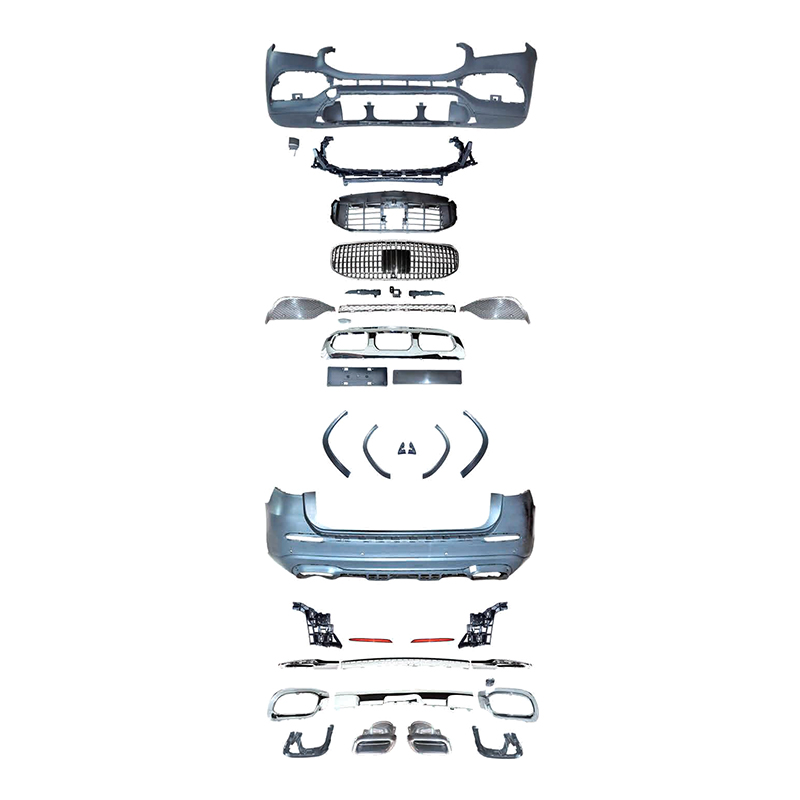 Maybach-Style Body Kit for 2020+ Mercedes-AMG GLS63 X167This conversion kit gives the 2020-and-later GLS63 X167 the Maybach GLS600 look, including front bumper, vertical-slat grille, rear bumper, diffuser, fender flares, and tailpipe trims, engineered for OEM sensor integration.View Product →
Programs like this only work when the manufacturer has tooled both the original and the target appearance, because every panel must bridge two different factory designs without visible seams.
Body kit companies are often judged on sports coupes, but some of the most demanding work happens on MPVs and commercial vehicles, where parts face heavy daily use and long service lives.
Toyota's Alphard and Vellfire show the pattern clearly. These MPVs are popular bases for appearance work across several generations, and well-organized manufacturers support them with full kits, matched headlamps and tail lamps, and year-conversion packages. A representative case is the package that carries a 2011-2014 Alphard to the 2018-era appearance:
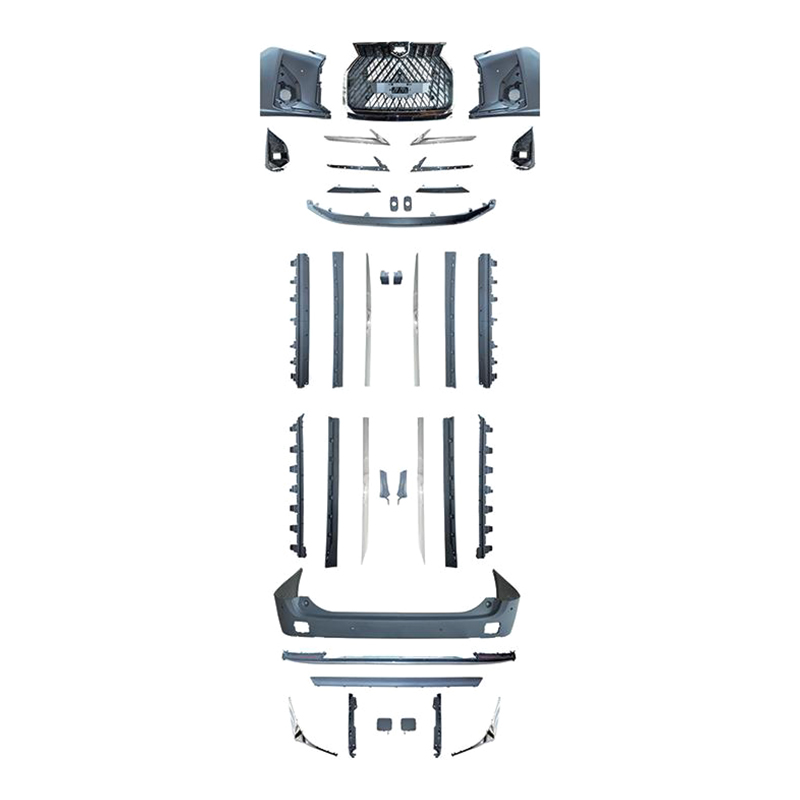 2011-2014 Toyota Alphard Upgrade Kit to 2018-2023 LookA full year-conversion package that restyles 2011-2014 Alphard models with the 2018-2023 generation's bumpers, grille, side skirts, rear lip, plus LED headlights, taillights, and daytime running lights.View Product →
Current-generation owners are covered as well, with complete aero packages such as this body kit developed for the 2018-2023 Vellfire:
 Complete Body Kit for 2018-2023 Toyota VellfireCurrent-generation Vellfire owners can refresh their MPV with a matched aero package covering front bumper, front lip, grille, rear lip, side skirts, and daytime running lights designed for consistent fitment.View Product →
The same logic extends to work vehicles. Kits and lighting for the Hiace and the Sprinter serve fleet operators who want a unified, professional appearance across dozens of units — a segment where durability and consistent fitment matter more than aggressive styling.
Start with the conclusion and work backward. If you drive a late-model luxury vehicle or MPV and want OEM-level fitment, prioritize an in-house manufacturer with injection molding capacity, chassis-code-precise listings, and documented quality credentials. If you are building a one-off show car, a custom fabricator earns its price. If you simply need a part in stock next week, a local distributor is fine — just confirm which factory actually made the part before you pay.
Whichever route you take, three questions separate a good supplier from an expensive lesson: what exactly is the part molded from, which chassis code was it tooled for, and who fixes it if the gaps are wrong? Companies that answer all three without hesitation are the ones worth your order.


If you are interested in our products, please consult us
No.280, Xincun, DongJia Village, Menghe Town, Xinbei District, Changzhou, Jiangsu, China.
+86-13915098651
+86-18068774710
+86-18068791866
+86-519-68885718
Changzhou Xinkai auto parts Co., Ltd. All Rights Reserved. Custom Automotive Exterior Accessories Manufacturers
