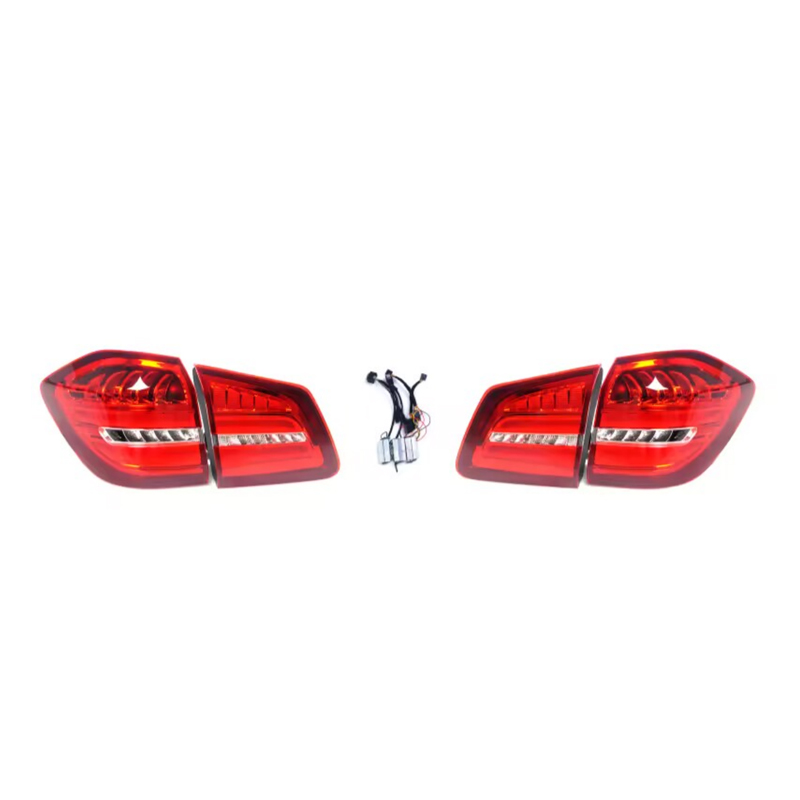
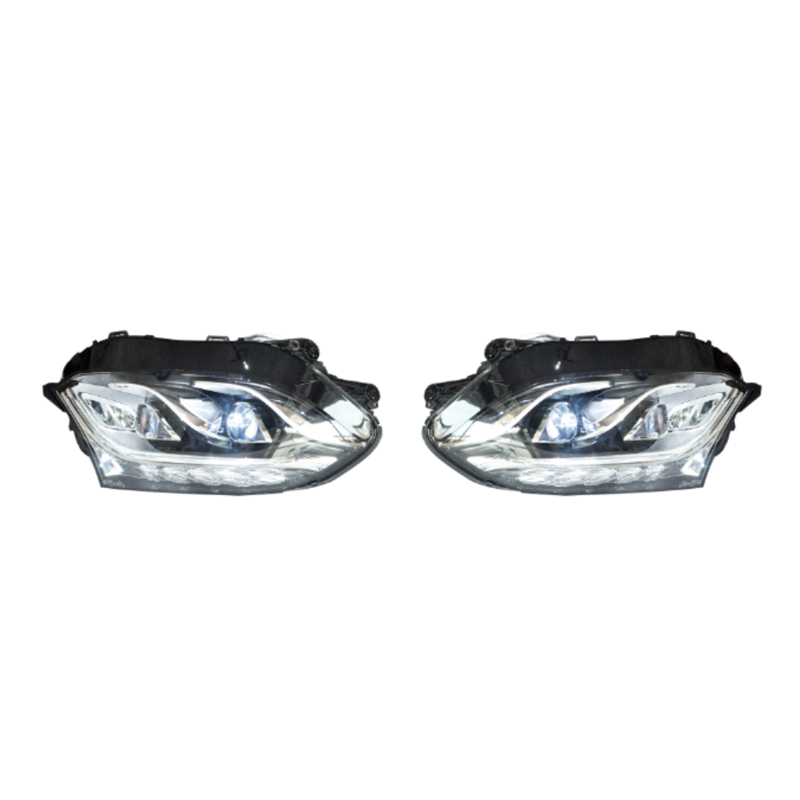
Our team is proud to offer on time guarantee and product guarantee to customer satisfaction.
Read More
Content
1. The transition from incandescent bulbs to LED technology in a modern Auto Tail Lamp is defined by a significant reduction in "rise time"—the interval required for a light source to reach 90% of its peak luminous intensity.
2. When evaluating how LED rise time improves braking safety, engineers note that incandescent filaments require thermal excitation, taking approximately 200 to 300 milliseconds to illuminate, whereas LEDs activate in less than 1 millisecond.
3. For a vehicle traveling at 100 km/h, the benefits of LED Auto Tail Lamps in emergency braking translate to an additional 5 to 7 meters of reaction distance for following drivers, a critical margin for preventing rear-end collisions.
4. The impact of signal response time on collision avoidance is a quantifiable metric in automotive safety engineering, directly correlating the millisecond-level advantage of Auto Tail Lamp LEDs to reduced kinetic energy during impact.
1. To ensure the long-term reliability of LED Auto Tail Lamps, specialized heat sinks are integrated into the housing to manage junction temperatures, as excessive heat can lead to spectral shifting and lumen depreciation.
2. The difference between LED and halogen tail lamp visibility is further accentuated during adverse weather; the high color temperature and narrow spectral bandwidth of LED arrays provide superior signal penetration through fog or heavy precipitation.
3. Utilizing a Auto Tail Lamp with advanced thermal dissipation prevents the "thermal runaway" effect, maintaining a stable tensile strength of the internal PCB and preventing micro-cracks in the solder joints under cyclic loading.
4. Analyzing why specialized thermal management is essential for LEDs involves measuring the thermal resistance (Rth) between the diode and the ambient air to guarantee an operational lifespan exceeding 30,000 hours.
1. The photometric performance of Auto Tail Lamps must comply with FMVSS 108 and ECE R7 standards, ensuring that the Ra surface finish of the internal reflectors optimizes light distribution across all viewing angles.
2. Testing the waterproof rating of Auto Tail Lamp assemblies (IP67 or higher) involves high-pressure water jets and thermal cycling to verify that ultrasonic welding seams maintain a hermetic seal against moisture ingress.
3. The influence of polycarbonate lens coatings on light transmittance is critical; anti-UV hard coatings are applied to maintain the Haze Value below 2% and preserve high impact resistance over the vehicle's lifecycle.
4. Comparison of Signal Response and Efficiency Parameters:
| Engineering Parameter | Incandescent Signal | Auto Tail Lamp (LED) |
| Rise Time to 90% Intensity | 250 ms | < 1 ms |
| Energy Consumption (W) | 21.0 - 27.0 | 1.5 - 5.0 |
| Operating Temperature Range | -40°C to +120°C | -40°C to +85°C (Active Cooling) |
| Impact Resistance (Lens) | Standard | High (Polycarbonate + Coating) |
1. Optimizing pulse width modulation for LED tail lamps allows for precise dimming and the implementation of sequential turn signals without compromising the instantaneous response required for brake lighting.
2. Testing the EMC compliance of Auto Tail Lamps ensures that the high-frequency switching of the LED driver does not interfere with ADAS sensors or the vehicle's internal communication bus (CAN/LIN).
3. The integration of adaptive lighting in modern Auto Tail Lamps enables variable intensity based on ambient light levels, further reducing glare for following vehicles while maintaining high signal contrast.
1. Does the faster rise time of an LED really make a difference on the road?
Yes. At highway speeds, the 250ms delay of an incandescent bulb is equivalent to the length of a full car. An Auto Tail Lamp with LED technology gives the driver behind you nearly half a second more to react.
2. Why do some LED tail lamps flicker on camera?
This is due to Pulse Width Modulation (PWM). The Auto Tail Lamp driver switches the LEDs on and off rapidly to control brightness. While invisible to the eye, it is captured by high-frame-rate sensors.
3. Are LED tail lamps more resistant to vibration than halogen?
Significantly. Since LEDs do not have a fragile filament, an Auto Tail Lamp is much more durable in heavy-duty or off-road applications where mechanical shock is frequent.
4. What causes an LED tail lamp to fail?
Heat is the primary enemy. If the internal heat sink fails to manage junction temperatures, the LEDs will dim or burn out. Quality Auto Tail Lamps prioritize thermal dissipation over pure aesthetics.
5. Can I replace a single LED in the assembly if it burns out?
Generally, no. Most Auto Tail Lamp units are hermetically sealed using ultrasonic welding for IP67 protection, making individual diode replacement impossible without compromising the seal.
1. FMVSS No. 108: Federal Motor Vehicle Safety Standards for Lamps, Reflective Devices, and Associated Equipment.
2. ECE R7: Uniform provisions concerning the approval of front and rear position lamps, stop-lamps, and end-outline marker lamps.
3. ISO 16750-3: Road vehicles — Environmental conditions and testing for electrical and electronic equipment (Mechanical loads).
If you are interested in our products, please consult us
No.280, Xincun, DongJia Village, Menghe Town, Xinbei District, Changzhou, Jiangsu, China.
+86-13915098651
+86-18068774710
+86-18068791866
+86-519-68885718
Changzhou Xinkai auto parts Co., Ltd. All Rights Reserved. Custom Automotive Exterior Accessories Manufacturers

English
Español
Deutsch
日本語
中文简体