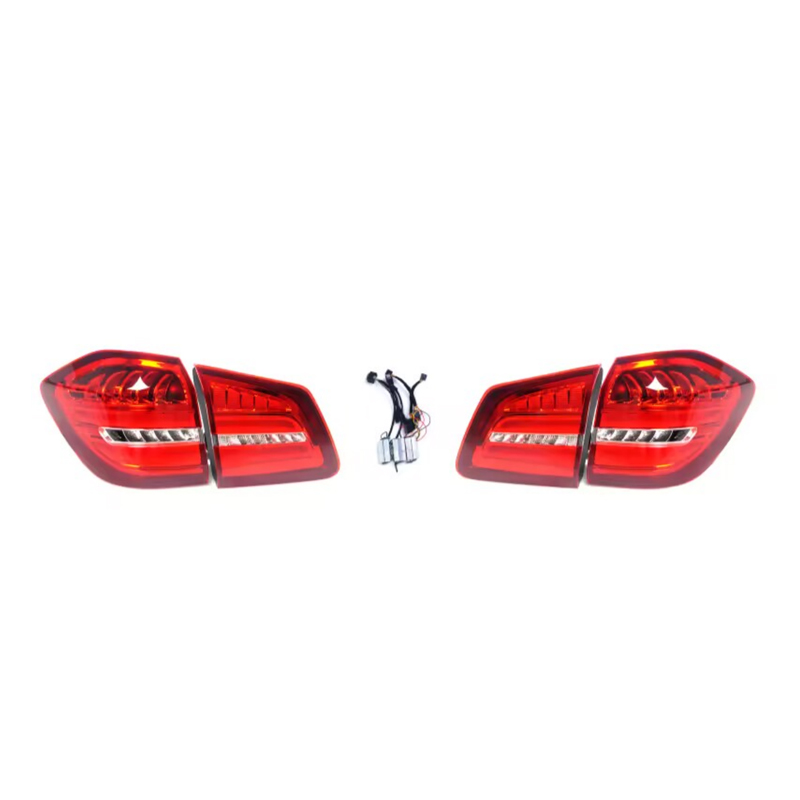
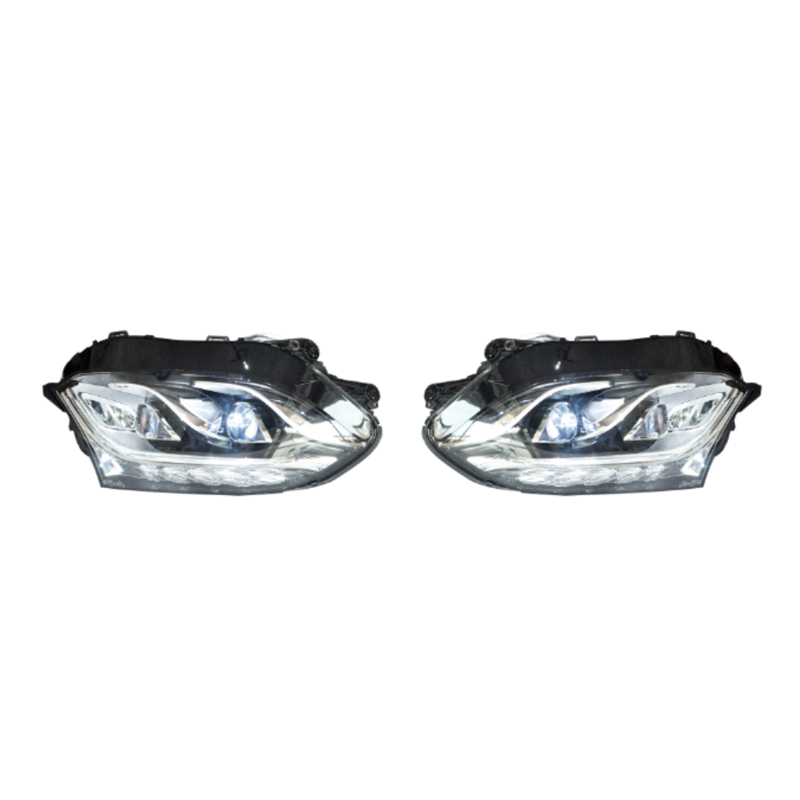
Our team is proud to offer on time guarantee and product guarantee to customer satisfaction.
Read More
Content
1. A professional body kit modification serves a dual purpose: optimizing the lift coefficient (Cl) and facilitating heat dissipation through high-velocity airflow channels.
2. When evaluating how brake ducts reduce thermal fade, engineers analyze the conversion of dynamic pressure at the front fascia into a concentrated stream directed at the rotor's cooling vanes.
3. The impact of air duct geometry on brake cooling efficiency is significant; a converging nozzle design increases air velocity, satisfying the Bernoulli principle to ensure maximum thermal exchange during high-load track sessions.
4. Integrating functional inlets during a body kit modification allows for a consistent mass flow rate, which is essential for maintaining the structural integrity of the brake calipers and preventing fluid boiling.
1. The tensile strength of the materials used in a body kit modification, such as pre-preg carbon fiber or high-impact ABS, must remain stable even when exposed to radiant heat exceeding 200°C from the braking system.
2. Investigating why carbon fiber is preferred for functional body kits reveals its low coefficient of thermal expansion, ensuring that air duct tolerances remain consistent under extreme temperature gradients.
3. Achieving an optimal Ra surface finish on the interior of the cooling ducts is a technical requirement, as excessive surface roughness can trigger turbulent flow, thereby reducing the effective air volume reaching the brake assembly.
4. A technical comparison of functional vs aesthetic body kits demonstrates that functional variants prioritize the Reynolds number and laminar flow maintenance to achieve measurable gains in lap time consistency.
1. Measuring brake rotor temperature reduction with body kits often involves infrared thermography, where functional ducts can result in a delta of 50°C to 100°C compared to non-ducted configurations.
2. In the context of a body kit modification, the tensile strength of the mounting brackets must account for the increased aerodynamic drag (Cd) generated by the intake of high-pressure air at the front bumper.
3. Optimizing front splitter design for brake duct airflow ensures that the stagnation point is leveraged to force air into the cooling circuit without negatively impacting the vehicle's high-speed downforce distribution.
4. Brake System Performance Comparison:
| Performance Variable | Standard OEM Configuration | Modified Functional Body Kit Modification |
| Rotor Peak Temperature | 650°C - 750°C | 550°C - 600°C |
| Thermal Recovery Time | Extended (Slow dissipation) | Accelerated (Forced convection) |
| Brake Fluid Boiling Point Stability | Low (Potential Fade) | High (Consistent Pressure) |
| Drag Coefficient (Cd) Impact | Baseline | +0.02 to +0.05 (Neutralized by downforce) |
1. How body kit ducts affect unsprung mass is a critical consideration for suspension tuning, as lightweight composites are used to minimize the impact on the vehicle's moment of inertia during cornering.
2. Testing the aerodynamic balance after body kit installation ensures that the increased front-end cooling does not create excessive rear-end lift, which would compromise high-speed stability.
3. For a successful body kit modification, the Ra surface finish of the exterior panels is meticulously refined to ensure that the boundary layer remains attached, reducing the wake turbulence at the rear of the vehicle.
1. Do I need functional ducts for a street-only body kit?
While not strictly necessary for daily driving, body kit modification with functional ducts provides a safety margin for high-altitude driving or heavy braking scenarios, even if track-level thermal loads aren't reached.
2. Does adding brake ducts increase the car's drag?
Yes, redirecting air through the body for cooling inherently increases the drag coefficient (Cd). However, the trade-off is a massive gain in braking reliability and thermal stability.
3. What is the best material for cooling duct inlets?
Carbon fiber or high-temp Nylon (PA66) are preferred due to their high heat deflection temperature (HDT), ensuring the tensile strength of the part is maintained near the hot rotors.
4. Can air ducts cause the brakes to be too cool?
In extreme cold, over-cooling can prevent race pads from reaching their optimal operating temperature. In such cases, adjustable block-off plates are used to regulate airflow.
5. Is the Ra surface finish of the duct interior important?
Yes. A smooth Ra surface finish (typically less than 3.2 microns) reduces skin friction, allowing more air to reach the brakes at lower vehicle speeds.
1. SAE J2994: Aerodynamic Testing of Passenger Cars and Light Trucks.
2. ISO 28580: Passenger car, truck and bus tyres — Methods of measuring rolling resistance — Single-point test and correlation of measurement results.
3. ASTM D638: Standard Test Method for Tensile Properties of Plastics.
If you are interested in our products, please consult us
No.280, Xincun, DongJia Village, Menghe Town, Xinbei District, Changzhou, Jiangsu, China.
+86-13915098651
+86-18068774710
+86-18068791866
+86-519-68885718
Changzhou Xinkai auto parts Co., Ltd. All Rights Reserved. Custom Automotive Exterior Accessories Manufacturers

English
Español
Deutsch
日本語
中文简体