 English
 Español
 Deutsch
 日本語
日本語 中文简体
中文简体Unlocking Superior Visibility: The Ultimate Guide to Your Auto Headlamp Upgrade Kit
Home / News / Industry News / Unlocking Superior Visibility: The Ultimate Guide to Your Auto Headlamp Upgrade Kit



Our team is proud to offer on time guarantee and product guarantee to customer satisfaction.
Read More
Content
Upgrading your vehicle's lighting system is one of the most impactful modifications you can make, directly influencing both your safety and driving experience. The right Auto Headlamp Upgrade Kit doesn't just make your car look better; it fundamentally changes your ability to perceive obstacles, react to hazards, and drive confidently after dusk. This comprehensive guide, written by a seasoned SEO content creator, delves into the specifics of modern headlight technology, installation best practices, legal compliance, and effective troubleshooting. We aim to provide you with the professional, in-depth knowledge necessary to make an informed decision and execute a successful, high-performance upgrade.
Driving visibility is arguably the single most important factor in nocturnal safety. Stock halogen headlights, while functional, often fall short of providing the wide, bright, and focused illumination required for modern highway speeds and varied driving conditions. Poor lighting contributes significantly to driver fatigue and limits reaction time, especially in bad weather. A high-quality Auto Headlamp Upgrade Kit is engineered to produce light that mimics natural daylight, cutting through darkness and inclement weather with greater intensity and clarity. This superior illumination helps your eyes register details further down the road and reduces strain, making long night drives safer and more comfortable. The difference between standard lighting and a modern upgrade is often the difference between adequate safety and maximum preparedness.
Finding the sweet spot between performance, reliability, and cost is key when searching for the Best budget LED auto headlamp upgrade kit. "Budget" does not have to mean "cheap" or "low-quality." It means finding a kit that utilizes efficient design, robust materials, and streamlined manufacturing to deliver exceptional value. When evaluating options, look for kits that feature quality components, such as solid-state cooling (mini-fans or heat sinks), reputable LED chips (like CSP or high-flux COB), and a compact design that fits easily into your vehicle's housing. A good budget kit will focus its resources on light quality and heat management rather than unnecessary features. It is critical to compare light output and expected lifespan, as a kit that fails prematurely is never a true budget-saver.
| Feature | High-Value Budget Kit | High-End Premium Kit |
| Light Output (Measured) | Good (3,000–4,000 True Lumens per bulb) | Excellent (5,000+ True Lumens per bulb) |
| Cooling System | Integrated fan or basic aluminum heatsink | Advanced copper heat pipes and silent high-speed fan |
| Lifespan Expectation | 20,000–30,000 Hours | 40,000–50,000 Hours |
| Price Point | Lower to Mid-Range | Higher End |
The choice of technology—Halogen, LED, or High-Intensity Discharge (HID)—is the most critical decision when selecting an Auto Headlamp Upgrade Kit. Halogen is the oldest and least efficient technology, generating light by heating a filament. While inexpensive, it produces a yellowish light, is energy-inefficient, and has a very short lifespan. LED (Light Emitting Diode) kits represent the modern standard, converting power to light very efficiently, producing a bright, white light, and boasting exceptional longevity. They are also highly durable and reach full brightness instantly. HID systems, conversely, create light via an arc between two electrodes in a xenon gas environment. They produce very bright light, often brighter than LEDs, but require a ballast to manage power, take a few seconds to warm up, and are mechanically more complex. This comparison is essential for anyone considering a significant lighting overhaul; understanding the distinct pros and cons of each will guide you to the appropriate kit for your vehicle’s specific needs and your driving habits. The overall goal is to maximize light output while minimizing energy draw and complexity.
| Technology | Typical Lifespan (Hours) | Energy Efficiency | Color Temperature (K) |
| Halogen | 1,000–2,000 | Low | 3,200–4,000 (Yellowish) |
| LED | 30,000–50,000 | High | 5,000–6,500 (White/Blue-White) |
| HID (Xenon) | 2,500–8,000 | Medium-High | 4,300–8,000 (White to Blue) |
When evaluating the performance of any Auto Headlamp Upgrade Kit, relying solely on marketing claims is insufficient; a deeper understanding of key metrics is required. Lumens measure the total light output, but true performance is dictated by effective or measured lumens, which account for light lost inside the housing. Color temperature, measured in Kelvin (K), determines the color of the light. While 6000K (blue-white) looks modern, optimal human visibility often falls between 4300K and 5500K, which is a pure white light that minimizes glare. Crucially, the beam pattern—how the light is projected onto the road—is perhaps the most important metric. A poorly designed kit, even with high lumens, will scatter light, dazzling oncoming drivers and failing to illuminate the road effectively. Look for kits that closely mimic the focal point of the original halogen bulb to ensure the light is properly focused by your vehicle’s reflector or projector optics. An ideal beam pattern is sharp, with a clear cut-off line, directing all light where it is needed.
Installing a high-performance headlight conversion kit is a task that is well within the capabilities of a dedicated DIY enthusiast, provided they follow precise, step-by-step instructions and take the necessary precautions. The process generally starts with disconnecting the vehicle’s battery to ensure safety and prevent electrical shorts. Next, access to the headlamp housing is required, which in some modern vehicles may necessitate the partial removal of the bumper or wheel well liner. Once the old bulb is removed, the new bulb from the Auto Headlamp Upgrade Kit is carefully inserted and secured, ensuring the orientation (especially for LED bulbs) is correct for the beam pattern. The driver or ballast is then mounted securely away from extreme heat sources, and the wiring harness is connected, often using a simple plug-and-play connector. The final, and most critical, step is aiming the headlights, which must be done accurately to maximize road visibility and prevent blinding other drivers. Taking time during each step ensures both longevity and performance of the upgrade.
Before beginning the conversion process, gathering the right tools is paramount, as is adhering to strict safety protocols. Essential tools typically include a socket wrench set, plastic trim removal tools (to prevent damage to paint and panels), wire cutters/strippers (if wiring modifications are required), and electrical tape or heat shrink tubing. Safety precautions are non-negotiable: wear safety glasses to protect against accidental debris, ensure the vehicle is cool before handling components near the engine, and work in a well-lit, dry environment. For HID kits, never handle the quartz glass bulb with bare hands, as oils can create hot spots and shorten the lifespan. Always double-check all electrical connections before reconnecting the battery, and use a multimeter to test for continuity if any doubt exists. A professional approach to tools and safety will guarantee a smooth and successful installation of your Auto Headlamp Upgrade Kit.
The legal landscape surrounding vehicle lighting modifications is complex and varies significantly by jurisdiction, making it essential to understand the Legal requirements for vehicle headlight upgrade kits before purchasing or installing any component. Generally, regulations focus on three key areas: light output intensity, color temperature, and beam pattern control. Many regions have strict rules prohibiting blue-tinted lights (often deemed too high a Kelvin rating) or any light that exceeds a specific lux or candlepower limit at the lens. Furthermore, many regulations state that if a vehicle was originally equipped with a halogen system, it must maintain that system unless a complete, certified headlight assembly (often from the vehicle manufacturer) is used. Installing an LED bulb in a reflector housing designed for halogen, while common, is often non-compliant because it creates excessive glare due to a poor beam pattern. Researching the specific regulations in your local area and ensuring your chosen Auto Headlamp Upgrade Kit meets those standards is a necessary step for responsible vehicle ownership.
| Regulation Focus | Common Requirement | Upgrade Kit Compliance Note |
| Light Intensity (Lumens/Lux) | Must not exceed a pre-defined maximum output to prevent glare. | Choose kits with accurate, non-exaggerated light output ratings. |
| Color Temperature (Kelvin) | Must be white or amber; typically 3000K–6500K maximum. | Avoid any kit with a distinct blue or purple hue. |
| Beam Pattern | Must feature a sharp, specific cut-off line (especially for low beams). | Requires careful aiming and potentially a compatible housing design. |
Achieving street-legality for your upgraded headlights goes beyond merely choosing a compliant bulb; it involves the installation context and the overall functionality within your vehicle's unique housing. Even a compliant Auto Headlamp Upgrade Kit can become non-compliant if it is incorrectly aimed or installed in an incompatible housing. The light’s focal point must align perfectly with the housing's reflective surfaces to create the correct pattern. Misalignment is the primary cause of glare that annoys other drivers and draws the attention of enforcement officers. Furthermore, ensure that all the original high-beam and low-beam functionalities are retained and operate correctly. If your vehicle uses a Canbus system, a non-compatible kit can cause flickering or failure, which is also a regulatory issue. Ultimately, maintaining legality is a combination of selecting a quality, compliant component, ensuring professional installation, and performing a final beam check against a flat surface to confirm proper aim and cut-off.
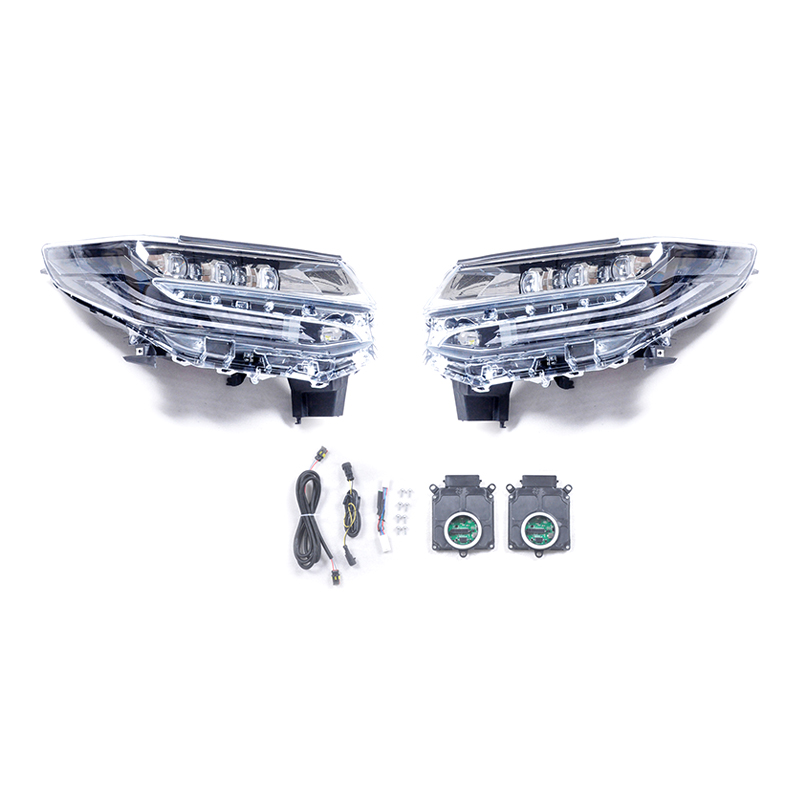
Even the highest-quality Auto Headlamp Upgrade Kit can sometimes present challenges, especially immediately following installation. Being prepared to engage in Troubleshooting common auto headlamp upgrade kit issues is key to maintaining peak performance. The most frequent complaint is "flickering," which almost always indicates a conflict with the vehicle's Canbus system, as the new light draws less power than the factory bulb, tricking the computer into thinking the bulb is out. This is typically solved by adding a Canbus decoder or resistor harness. Another common issue is a distorted or scattered beam pattern, which is usually due to the LED bulb not being correctly seated or rotated in the housing. Overheating, which leads to premature failure, is often caused by the fan being blocked or the driver being mounted in an area with poor airflow. A methodical approach, starting with the simplest cause (checking connections) and moving to more complex solutions (installing decoders or rewiring), will resolve most post-installation problems quickly and efficiently.
Maximizing the lifespan of your upgraded lighting system is largely a matter of routine maintenance and proper care. While LED and HID kits boast significantly longer lifespans than traditional halogen bulbs, external factors can still shorten their life considerably. One of the most important steps is ensuring the headlight lens remains clear and clean; a foggy or yellowed lens scatters light, reduces output, and traps heat, which can damage the delicate electronics of an LED or HID bulb. Utilize a protective sealant or perform an occasional lens restoration to maintain clarity. Periodically inspect the wiring and connections, especially after harsh weather or off-road driving, to ensure no corrosion has set in. Finally, always operate your vehicle with a stable electrical system—a failing battery or alternator can cause voltage spikes that will quickly degrade the performance and life of your expensive Auto Headlamp Upgrade Kit components.
The distinction between an LED conversion kit and a complete assembly replacement is significant, relating to legality, cost, and complexity. An Auto Headlamp Upgrade Kit (LED conversion kit) is a set of LED bulbs and drivers designed to fit into your vehicle's existing, factory-installed headlight housing (reflector or projector). The advantage is lower cost and easier installation. However, because the housing was optically designed for a halogen bulb's filament, the beam pattern with an LED bulb is often imperfect, which can lead to glare and potential non-compliance with road regulations. Conversely, a full LED headlight assembly replacement involves removing the entire factory housing and replacing it with a unit where the LED light source is integrated and specifically engineered with the lens and reflector/projector to produce a perfect, DOT-compliant beam pattern. While significantly more expensive, the assembly replacement offers guaranteed compliance and optimal performance, eliminating the guesswork inherent in using a Best budget LED auto headlamp upgrade kit within a mismatched housing.
A properly designed and installed high-output Auto Headlamp Upgrade Kit should not damage your vehicle's wiring or housing. The risk is typically associated with poorly engineered kits. For LED kits, the primary concern is heat. While LEDs run cooler than HIDs and halogens in terms of light output, the heat is concentrated at the bulb's base. Quality kits manage this with advanced heat sinks and fans; cheap kits that lack this cooling can overheat and damage the plastic wiring connectors or the housing itself. For HID kits, the high voltage required by the ballast can stress inadequate wiring, potentially leading to melted insulation or blown fuses if the kit's harness is not robust enough. When considering any upgrade, especially one focused on high performance, always look for kits that include heavy-duty, properly gauged wiring and integrated thermal management to mitigate the risks addressed in Troubleshooting common auto headlamp upgrade kit issues.
For an optimal balance of brightness, clarity, and compliance, a Kelvin (K) rating between 5000K and 6000K is strongly recommended when choosing your Auto Headlamp Upgrade Kit. Light in the 5000K to 5500K range is considered pure white, closely mimicking natural daylight. This provides the best contrast and clarity for the human eye, which is crucial for identifying obstacles on the road. Moving slightly higher, 6000K offers a bright, modern white light with a slight, subtle blue tint. While 6500K is also common, it verges into the blue spectrum, which can cause increased glare to oncoming traffic and reduces visibility in inclement weather, such as rain or fog. Choosing a kit within the 5000K–6000K range ensures that you meet the aesthetic demands of a high-performance upgrade while adhering to the spirit of the Legal requirements for vehicle headlight upgrade kits by avoiding excessively blue or non-compliant light output.


If you are interested in our products, please consult us
No.280, Xincun, DongJia Village, Menghe Town, Xinbei District, Changzhou, Jiangsu, China.
+86-13915098651
+86-18068774710
+86-18068791866
+86-519-68885718
Changzhou Xinkai auto parts Co., Ltd. All Rights Reserved. Custom Automotive Exterior Accessories Manufacturers
