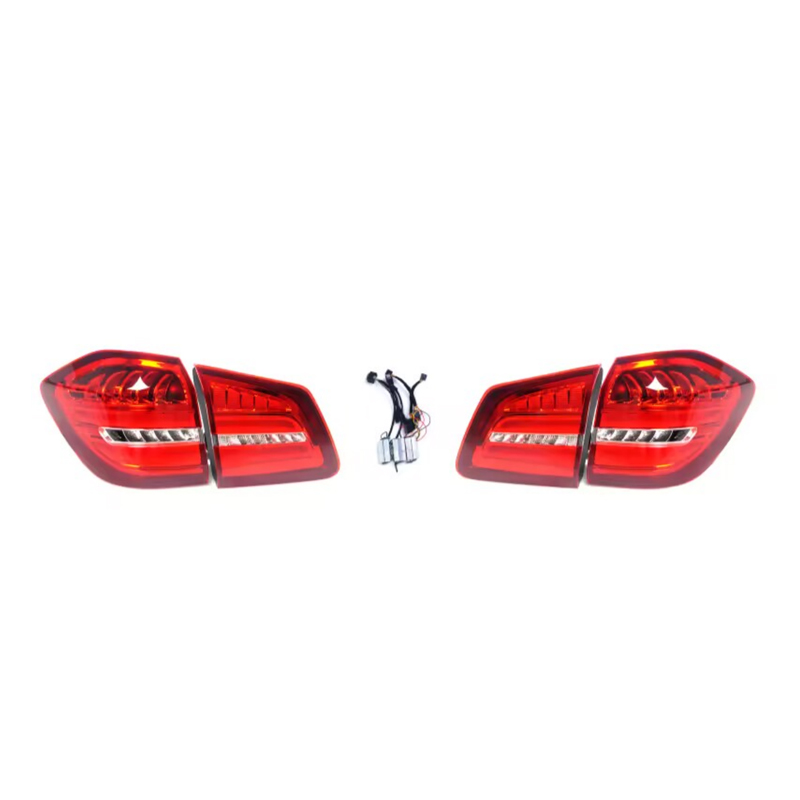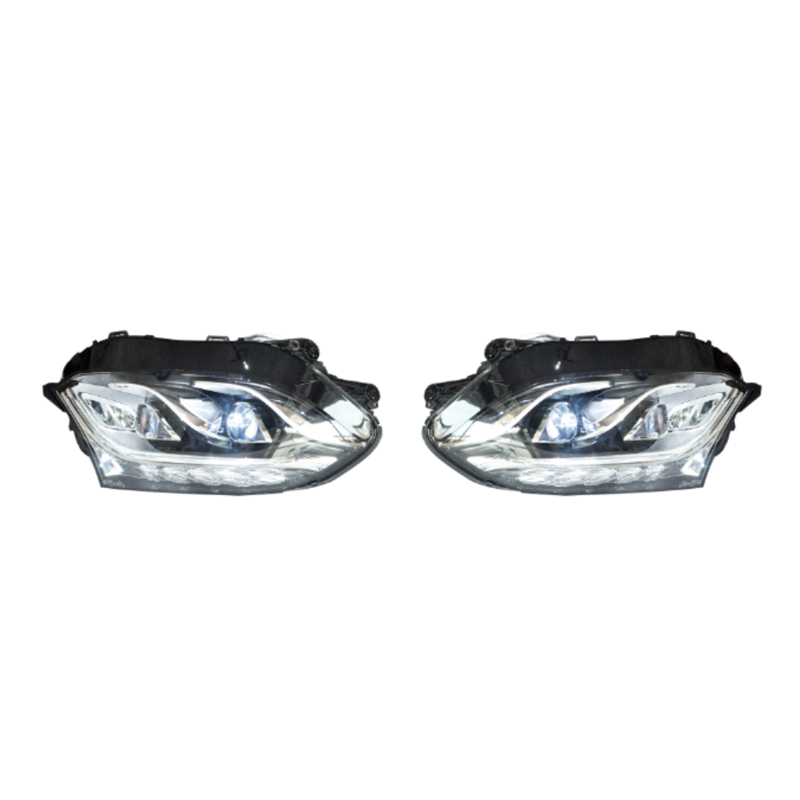
Our team is proud to offer on time guarantee and product guarantee to customer satisfaction.
Read More
Content
The automotive exterior lighting sector represents one of the most critical segments in the global auto parts aftermarket and original equipment supply chain. Within this domain, the Toyota Auto Headlamp product category commands an immense market share due to the massive global operational footprint of Toyota vehicles. From heavy-duty commercial applications like the Hilux and Land Cruiser to high-volume passenger cars such as the Corolla, Camry, and RAV4, the demand for precise, durable, and high-performance replacement headlamp assemblies continues to grow rapidly across North America, Europe, Southeast Asia, and the Middle East.
For international buyers, wholesale distributors, and automotive component brands, understanding the intricate technical variations within Toyota auto headlamp assemblies is essential for successful product sourcing and quality control. Toyota headlamps are not uniform; they encompass a wide spectrum of illumination architectures—ranging from traditional dual-beam halogen reflector setups to state-of-the-art multi-projector LED matrix assemblies featuring sequential turn signals and integrated daytime running lights (DRLs).
Manufacturing high-grade Toyota-compatible headlamps requires strict adherence to photometric standards, optical alignment, thermal management, and environmental resistance. A failing headlamp assembly introduces severe safety risks, including beam distortion, water ingress, lens yellowing, and electrical component overload. This technical paper provides a exhaustive comparative evaluation of optical architectures, bulb technologies, material standards, and manufacturing benchmarks governing Toyota replacement headlamps, offering actionable insights for global procurement professionals.
When evaluating a Toyota auto headlamp assembly, the optical delivery mechanism is the primary structural differentiator. Toyota utilizes two primary optical designs across its vehicle generations and trim levels: Reflector Housing Systems and Projector Lens Systems.
Reflector headlamps represent the classic lighting architecture used extensively in base-model Toyota vehicles such as older generations of the Corolla, Yaris, and Hilux. The system relies on a light source (typically a halogen bulb like H4, H11, or HB3) situated at the focal point of a parabolic reflector bowl. The inner surface of the bowl is coated with a mirror-like vacuum-aluminized layer designed to bounce light forward in a broad, wide beam.
While cost-effective to manufacture and replace, reflector systems present significant limitations in beam control. Light is dispersed over a wider angle, resulting in lower forward lux intensity and higher potential for upward light bleed, which can create glare for oncoming drivers.
Projector headlamps, standard on modern mid-to-high trim Toyota vehicles (such as the RAV4, Camry, 4Runner, and Highlander), utilize an advanced optical assembly. Instead of relying solely on an open reflector, a projector housing contains an internal reflector bowl, a physical cut-off shield, and a precise glass condenser lens.
The internal reflector directs light toward the focus point of the glass lens, while the cut-off shield blocks light rays that would otherwise travel upward. This creates a razor-sharp horizontal light-dark boundary (cutoff line). As a result, Toyota projector headlamps concentrate light far more efficiently down the roadway, maximizing down-road visibility without dazzling oncoming traffic.
| Optical Parameter | Toyota Reflector Headlamp | Toyota Projector Headlamp |
| Beam Efficiency | Moderate (60% - 70% light utilization) | High (85% - 92% light utilization) |
| Cutoff Line Sharpness | Soft, feathered, prone to glare | Razor-sharp, precise optical cutoff |
| Down-Road Distance | Standard (50m - 80m effective range) | Extended (100m - 150m+ effective range) |
| Manufacturing Complexity | Lower tooling cost, fewer internal parts | Higher tooling cost, multi-part optical alignment |
| Light Source Compatibility | Primarily Halogen, basic LED bulbs | Halogen, HID (Xenon), Integrated LED Modules |
The bulb technology integrated into a Toyota auto headlamp assembly drastically dictates electrical draw, luminous flux (lumens), lux output over distance, and overall unit lifespan. Factories producing Toyota aftermarket and OEM-replacement units must engineer internal components specifically tuned to each bulb type.
Halogen systems remain popular in replacement markets due to their simplicity and low production cost. Operating with a tungsten filament inside a capsule filled with halogen gas, these lamps typically operate at 55W to 65W, producing approximately 1,000 to 1,500 lumens per side with a color temperature around 3200K (warm yellow light).
Manufacturing Challenges: Halogen bulbs generate substantial heat inside the housing. Reflector housings and outer lenses must utilize high-heat-resistant Polycarbonate (PC) and Bulk Molding Compound (BMC) materials to prevent warping, yellowing, or lens clouding over extended operation.
Utilized extensively in premium Toyota trims (such as older Land Cruiser 200, Crown, and Camry models), HID systems pass an electric arc between two electrodes inside a quartz capsule filled with xenon gas. HID lamps consume 35W while producing upwards of 3,200 lumens at a color temperature between 4300K and 6000K.
Technical Considerations: HID systems require external electronic ballasts to ignite and sustain the arc. When manufacturing replacement headlamps for HID-equipped Toyotas, housing designs must include integrated ballast mounting locations, high-voltage shielded wiring harnesses, and precision projector bowls capable of handling intense ultraviolet (UV) emissions without degradation.
Modern Toyota headlamp designs (e.g., current Tacoma, RAV4, Corolla, and Prius models) rely heavily on fully integrated LED chips mounted directly onto internal circuit boards or specialized heat sinks. Operating at 18W to 35W per module, LED systems produce 3,000 to 5,000+ lumens of clean white light (5500K - 6000K) with instant-on capability and an operational lifespan exceeding 30,000 hours.
Engineering Requirements: Unlike halogen bulbs that radiate heat forward, LEDs generate intense heat at their base. Consequently, integrated LED Toyota auto headlamps require heavy-duty aluminum heat sinks, passive or active cooling fans, internal driver circuits, and anti-flicker CANBus decoders to prevent dashboard fault warnings on modern Toyota vehicle electrical networks.
| Specification Parameter | Halogen Assembly | HID (Xenon) Assembly | Full LED Assembly |
| Operating Power Draw | 55W - 65W per lamp | 35W - 42W per lamp | 18W - 32W per lamp |
| Luminous Output | 1,000 - 1,500 Lumens | 2,800 - 3,400 Lumens | 3,200 - 5,500 Lumens |
| Color Temperature | 3000K - 3400K (Warm Yellow) | 4300K - 6000K (Daylight) | 5500K - 6500K (Pure White) |
| Average Lifespan | 500 - 1,000 Hours | 2,500 - 3,500 Hours | 30,000 - 50,000 Hours |
| Ignition Response | Instant (<0.1 second) | Warm-up delay (3 - 7 seconds) | Instant (<0.01 second) |
To produce automotive headlamps that meet rigorous international automotive standards (such as US DOT/SAE compliance and European E-Mark certification), factory production must rely on specialized engineering polymers, advanced coating processes, and rigorous environmental testing protocols.
The front lens of a Toyota headlamp is manufactured from high-impact optical-grade Polycarbonate (PC). PC provides extreme shatter resistance against road debris, gravel, and minor collisions. However, raw PC is susceptible to ultraviolet (UV) degradation, which leads to yellowing, micro-cracking, and haze over time.
To eliminate this risk, factory production lines apply a specialized UV-curable silicon hard-coat layer onto the outer lens surface through automated dip or spray coating inside cleanrooms. This hard coat provides UV protection and anti-scratch durability, ensuring crystal-clear optical transparency for years of road use.
The structural rear housing of the headlamp assembly must withstand engine bay heat, mechanical vibration, and extreme temperature fluctuations without warping or fracturing. Quality manufacturers utilize reinforced Polypropylene (PP) or Acrylonitrile Butadiene Styrene (ABS) mixed with glass fiber reinforcement. These materials maintain dimensional stability across ambient operating temperatures ranging from -40 degrees Celsius to +120 degrees Celsius.
Water condensation inside a Toyota headlamp housing is one of the most frequent quality complaints reported by importers and consumers. Premium manufacturing processes employ automated polyurethane glue dispensers to inject a continuous, high-grade butyl rubber or hot-melt polyurethane sealant channel along the joint where the PC lens meets the PP rear housing.
Additionally, housings feature breathable membrane vent caps (such as Gore-Tex vents). These vents allow air pressure to equalize during temperature spikes while blocking liquid water droplets and dust particles from entering the assembly.
A primary challenge for aftermarket Toyota auto headlamps lies in maintaining complete electrical compatibility with factory wiring harnesses. Toyota utilizes distinct multi-pin connector pinouts across different model lines and trim grades. For instance, upgrading a factory halogen-equipped Toyota Tacoma or 4Runner to a modern LED projector assembly requires precise harness mapping.
Precision-engineered Toyota auto headlamp assemblies must mirror original equipment mounting points, tab locations, and body lines exactly. Factory tooling uses 3D laser scanning of genuine Toyota vehicle front ends to ensure that 100% plug-and-play installation is achieved without requiring bumper modifications, bracket bending, or body gaps.
Modern Toyota vehicles monitor headlamp circuit resistance to detect burned-out light bulbs. Because LED light sources draw significantly less current than halogen bulbs, retrofitting LED assemblies onto halogen-spec vehicles can trigger hyper-flashing turn signals or "Bulb Out" warning icons on the instrument cluster.
To eliminate these issues, professional Toyota headlamp assemblies integrate built-in load resistors and electronic CANBus decoders directly inside the housing wiring harness. This ensures seamless communication with Toyota body control modules (BCM) without requiring wire splicing or external modifications.
Manufacturing world-class Toyota auto headlamp units requires an end-to-end quality control pipeline. Below is the step-by-step production methodology executed at certified automotive lighting facilities:
For international buyers and procurement managers sourcing Toyota auto headlamps from OEM or aftermarket manufacturing suppliers, making informed purchasing decisions relies on evaluating specific technical criteria:
Yes, provided the aftermarket headlamp assembly is custom-engineered with the matching multi-pin plug-and-play wiring harness and integrated CANBus resistors. Direct plug-and-play LED assemblies bypass the need for wire cutting or modifications while preventing dashboard error lights.
Condensation occurs when humid air inside the housing meets the cold outer PC lens. Minor fogging that dissipates after turning on the lights is normal physical evaporation. However, persistent water pooling indicates a failed sealant bond along the lens edge or damaged atmospheric vent caps.
Projector headlamps utilize a glass condenser lens and internal cutoff shield to focus light precisely onto the roadway. This minimizes wasted scatter light, concentrates down-road illumination, and prevents blinding oncoming drivers with upward glare.
High-quality headlamps utilize optical-grade Polycarbonate (PC) with a UV-curable hard coat for the front lens. The structural rear housing requires heat-resistant reinforced Polypropylene (PP) or ABS, while internal reflector bowls use Bulk Molding Compound (BMC) to withstand high operational temperatures without outgassing.
Factories test completed headlamps in darkroom goniophotometer facilities to measure lux distribution, color temperature, and beam cutoff geometry. Compliance with DOT/SAE (North America) or ECE (Europe) standards guarantees that beam patterns fulfill legal requirements for road safety.
If you are interested in our products, please consult us
No.280, Xincun, DongJia Village, Menghe Town, Xinbei District, Changzhou, Jiangsu, China.
+86-13915098651
+86-18068774710
+86-18068791866
+86-519-68885718
Changzhou Xinkai auto parts Co., Ltd. All Rights Reserved. Custom Automotive Exterior Accessories Manufacturers
English
Español
Deutsch
日本語
中文简体