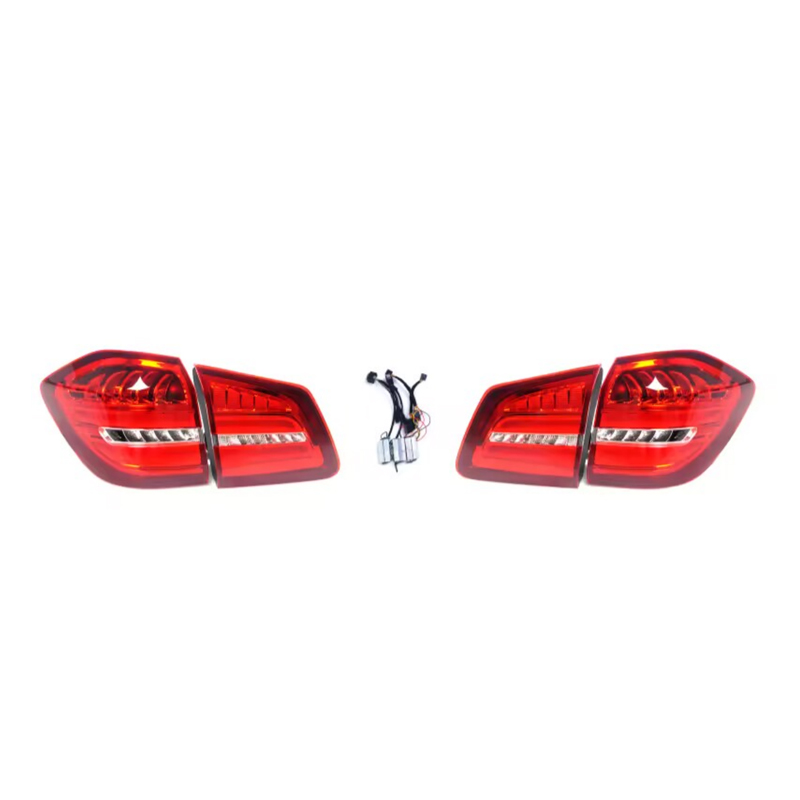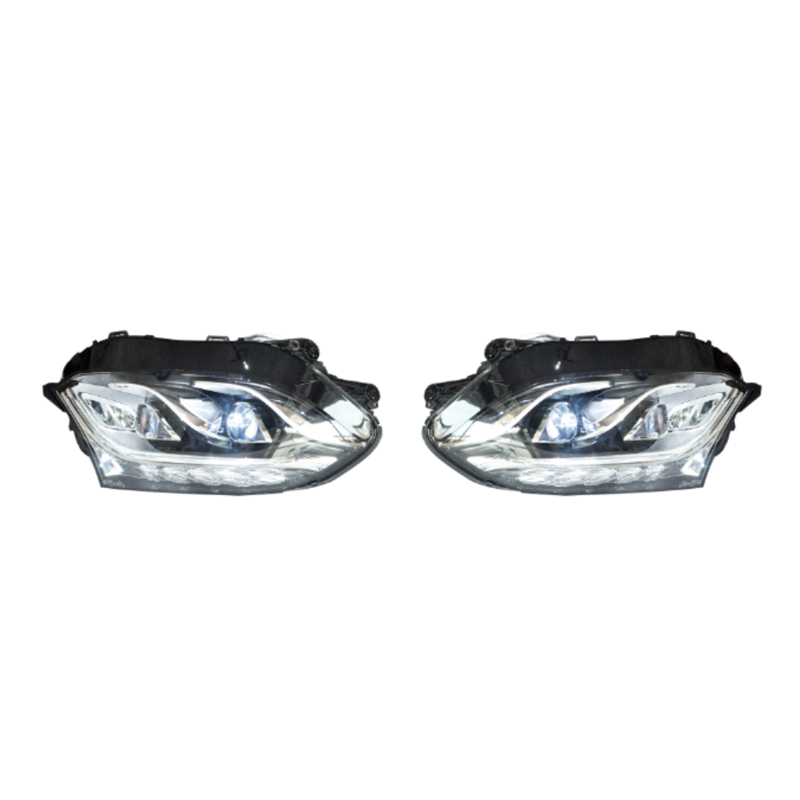
Our team is proud to offer on time guarantee and product guarantee to customer satisfaction.
Read More
Content
The global automotive repair and assembly ecosystem relies heavily on the continuous supply of precise, durable, and structurally sound body components. Car body parts—ranging from exterior sheet metal panels to internal reinforcement members—serve a dual purpose: establishing the aerodynamic profile and visual aesthetic of the vehicle while providing critical structural protection for passengers.
For commercial distributors, fleet maintenance operators, and automotive replacement vendors, choosing between Original Equipment Manufacturer (OEM) parts and high-grade aftermarket components represents a major operational decision. Understanding the technical nuances between these two categories requires examining the entire manufacturing workflow, from metallurgical composition and precision die stamping to surface priming, dimensional verification, and impact safety compliance.
This document provides a thorough engineering and commercial evaluation of car body parts. It explores material science, fabrication methodologies, fitment tolerances, structural behavior during collision events, and lifetime cost factors to assist automotive buyers in selecting the optimal products for their distribution networks.
Automotive body architecture is broadly categorized into exterior dynamic panels, static structural frames, and impact-absorbing bumper systems. Each category undergoes distinct tooling processes and requires distinct alloy grades to fulfill its functional requirements.
Exterior dynamic panels include doors, engine hoods (bonnets), trunk lids (tailgates), and fuel filler covers. These components are subjected to constant mechanical cycling during daily vehicle operation. Hoods and doors must balance structural rigidity with weight efficiency to ensure smooth latching, proper hinge alignment, and minimal gravitational wear over time.
Static panels comprise front fenders, rear quarter panels, roof sheets, and rocker panels. Fenders and quarter panels form the outer aerodynamic skin of the vehicle while protecting inner mechanical and electrical subsystems from road debris, water ingress, and environmental corrosion. Because quarter panels are welded directly into the vehicle unibody structure, their dimensional accuracy is critical during replacement procedures.
Underneath the visible sheet metal lies the structural backbone of the body in white (BIW). This sub-assembly includes radiator supports, inner wheel arches, A-B-C pillars, floor pans, door impact beams, and front/rear bumper reinforcement bars. These parts absorb and redistribute collision energy away from the passenger cabin during impact scenarios.
The selection of raw materials directly dictates the weight, yield strength, tensile performance, and corrosion resistance of car body components. Modern auto body manufacturing utilizes advanced steel grades and specialized aluminum alloys.
Steel remains the traditional foundation of automotive body fabrication due to its high tensile strength, excellent formability, and cost efficiency. Dual-Phase (DP) steel and Transformation-Induced Plasticity (TRIP) steel offer exceptional yield strength up to 1200 MPa, making them ideal for door impact beams, floor pans, and pillar reinforcements. High-strength steel panels provide superior dent resistance on outer body skins while maintaining structural integrity during mechanical stress.
Aluminum body parts have gained rapid market adoption due to lightweighting initiatives aimed at improving fuel efficiency and extending electric vehicle driving range. 5000-series aluminum (magnesium-stabilized) is extensively used for complex interior stampings, while 6000-series aluminum (silicon-magnesium heat-treatable) is utilized for exterior hoods and fenders. Aluminum offers roughly one-third the density of steel, providing mass reduction of 30 to 50 percent for equivalent panel thickness. However, aluminum requires specialized stamping dies and advanced welding technologies such as Cold Metal Transfer (CMT) or self-piercing riveting.
Producing high-grade car body parts requires multi-stage heavy industrial processing. Manufacturers must maintain high thermal and dimensional stability across millions of production cycles.
The primary manufacturing method for sheet metal body parts is deep-drawing die stamping. Cold-rolled steel or aluminum coils are unwound, leveled, and blanked into sheet metal preforms. These preforms are loaded into progressive transfer press lines featuring multiple die stations:
For complex sub-assemblies and high-strength steel components, 5-axis fiber laser cutting systems replace traditional mechanical trimming dies. Laser cutting provides clean edge profiles without inducing localized stress deformation or edge micro-cracking, ensuring consistent mounting dimensions across large production runs.
Assembled body components, such as dual-skinned doors and double-walled hoods, feature an outer skin bonded to an inner structural frame. Automated robotic arms apply hem-flange structural adhesives along perimeter seams before performing resistance spot welding or laser seam welding. This hybrid joining method increases torsional stiffness and prevents moisture intrusion between inner and outer panels.
The primary point of evaluation when comparing OEM and aftermarket body parts revolves around geometric dimensional tolerance, surface flatness, and gap consistency during installation.
| Engineering Parameter | OEM Body Parts | Standard Aftermarket Body Parts | High-Precision Aftermarket Body Parts |
|---|---|---|---|
| Dimensional Tolerance | Within +/- 0.5 mm | Within +/- 1.5 mm to 2.5 mm | Within +/- 0.8 mm |
| Tooling Standard | Original Master Dies | Reverse-Engineered Scanned Dies | Laser-Scanned CMM Dies |
| Sheet Thickness Uniformity | 100% Match to Vehicle Specs | Variable (-5% to -10% nominal thickness) | 100% Match to Vehicle Specs |
| Hemming Quality | Automated Hemmed Seams | Manual or Semi-Automated Seams | Automated Hemmed Seams |
| Surface Finish | E-Coated Uniform Primer | Basic Spray Primer / Oiled | Cathodic E-Coated Finish |
| Installation Time | Plug-and-Play Fitment | May Require Trimming/Bending | Direct Bolt-On Fitment |
OEM parts are manufactured using original CAD models and tooling dies commissioned by the vehicle brand, maintaining dimensional tolerances within +/- 0.5 mm. Aftermarket parts are created by third-party manufacturers who utilize reverse engineering techniques, such as 3D laser scanning of original samples. Premium aftermarket suppliers employ coordinate measuring machines (CMM) and optical 3D scanners to verify that replacement panels match factory mounting hole positions, hinge locations, and contour lines, reducing installation adjustment times for body repair shops.
Body panels must exhibit uniform surface flatness without wavy contours, press marks, or metal burrs. Superior body components undergo rigorous surface cleaning, phosphating, and electrodeposition coating (E-coating) prior to packaging. E-coating creates a corrosion-resistant barrier that accepts automotive topcoats and clear coats without requiring extensive surface sanding or filler prep work.
Car body parts are continually exposed to harsh environmental factors, including rain, road salt, ultraviolet radiation, and gravel impacts. Adequate surface protection determines the service life of replacement components.
High-grade steel body panels utilize electro-galvanized (EG) or hot-dip galvanized (HDG) steel sheets. The zinc coating acts as a sacrificial anode, preventing rust formation even if the outer paint layer suffers chips or scratches. OEM panels always use galvanized substrates. While lower-cost aftermarket alternatives may use ungalvanized cold-rolled steel coated only with temporary shipping oil, reputable aftermarket manufacturers utilize pre-galvanized sheet metal to guarantee long-term rust prevention.
E-coating is an electrochemical process where the body panel is fully submerged in a charged paint bath. Electrical current attracts paint particles to every surface, cavity, and internal seam of the component. E-coated panels pass salt spray corrosion tests lasting over 1,000 hours without red rust formation, providing robust rust protection for the vehicle owner.
Automotive body parts play a major role in vehicle crash safety. Structural panels and exterior sheet metal absorb impact energy, distributing kinetic forces around the occupant safety cell.
Hoods, front fenders, and frame rails are engineered with precise indentation ribs and crumple initiation points. During a frontal collision, these predefined crease lines cause the sheet metal to fold predictably like an accordion, preventing the hood from penetrating the windshield glass. OEM components undergo full-scale vehicle crash testing to validate these deformation patterns.
To verify that aftermarket collision repair parts offer structural safety comparable to original equipment, international testing organizations certify component performance. Certified body components undergo material testing, tensile strength analysis, weld shear testing, and vehicle fitment trials to verify that they deform correctly during impact events, giving fleet managers and insurance underwriters confidence in their performance.
Selecting body parts involves balancing unit purchasing costs, shipping logistics, and repair labor expenses.
OEM body parts carry a price premium due to original tooling investment costs, brand licensing, and dealership distribution markups. OEM collision parts can cost between 30 and 60 percent more than equivalent aftermarket components. High-quality aftermarket body components provide cost savings for wholesale distributors and body repair shops seeking competitive pricing.
While budget aftermarket parts may feature low purchase prices, poor dimensional tolerances can result in extra labor costs during installation. Body technicians may spend extra time bending tabs, drilling out misaligned mounting holes, or filling surface waves. High-precision aftermarket parts eliminate these labor overheads by offering direct bolt-on alignment, lowering total installation costs.
Sheet metal components are vulnerable to transit damage such as denting, corner bending, and surface scratching. Professional manufacturers package components using corrugated edge protectors, anti-scratch foam lining, inner plastic wrapping, and heavy-duty wooden crate crates. Proper packaging minimizes freight damage claims during international container shipment.
| Technical Feature | OEM Car Body Parts | High-Grade Aftermarket Parts | Low-Cost Aftermarket Parts |
|---|---|---|---|
| Primary Material | OEM Spec Steel / Aluminum | Grade-A Galvanized Steel / Aluminum | Standard Cold-Rolled Steel |
| Manufacturing Method | Automated Transfer Pressing | Precision Hydraulic Pressing | Manual / Semi-Automated Stamping |
| Substrate Protection | Zinc Galvanized (EG/HDG) | Galvanized Substrate | Ungalvanized Steel |
| Surface Primer | Cathodic E-Coat | Cathodic E-Coat | Basic Transport Primer |
| Fitment Accuracy | Perfect (+/- 0.5 mm) | High (+/- 0.8 mm) | Variable (+/- 2.0 mm or more) |
| Crash Safety Compliance | Factory Crash Certified | Third-Party Safety Certified | Uncertified |
| Corrosion Resistance | Excellent (1,000+ hr Salt Spray) | Excellent (800-1,000 hr Salt Spray) | Poor (Under 300 hr Salt Spray) |
| Commercial Price Point | High Premium | Moderate / Cost-Effective | Low |
Commercial importers and distributors should follow a structured evaluation protocol when establishing supplier relationships for automotive body parts:
OEM parts are manufactured by or for the original vehicle automaker using proprietary tooling dies and exact factory specifications. Aftermarket car body parts are produced by independent component manufacturers as replacement alternatives. While OEM parts offer guaranteed original fitment, high-grade aftermarket parts provide comparable quality, dimensional accuracy, and corrosion protection at a substantially lower acquisition cost.
Yes, high-grade and third-party certified aftermarket sheet metal panels are fully safe for collision repair. Certified aftermarket components undergo rigorous testing to ensure they replicate the original thickness, material yield strength, and structural collapse behavior during crash scenarios, preserving the vehicle crumple zones and occupant safety cell.
Electrodeposition coating (E-coating) immerses the entire metal part into an electrically charged paint bath, creating an exceptionally uniform protective layer across inner channels, seams, and outer surfaces. E-coating provides long-term resistance against rust and moisture, serving as an ideal foundation for automotive primers and final paint finishes.
Tight stamping tolerances ensure that replacement panels align cleanly with existing vehicle panels, door frames, and hinge mounting points. If a panel has poor tolerance margins, body technicians must spend additional labor hours cutting, bending, shimming, or filing the panel to achieve uniform panel gaps, significantly increasing total repair costs.
Both materials offer distinct operational advantages. Steel provides higher yield strength, excellent crash absorption, ease of repair, and lower material cost, making it the standard choice for main structural members and high-volume body panels. Aluminum provides up to 50 percent weight reduction and superior natural corrosion resistance, making it ideal for vehicle hoods, fenders, tailgates, and electric vehicle body components where mass reduction is critical.
If you are interested in our products, please consult us
No.280, Xincun, DongJia Village, Menghe Town, Xinbei District, Changzhou, Jiangsu, China.
+86-13915098651
+86-18068774710
+86-18068791866
+86-519-68885718
Changzhou Xinkai auto parts Co., Ltd. All Rights Reserved. Custom Automotive Exterior Accessories Manufacturers
English
Español
Deutsch
日本語
中文简体